
Meanwhile “Back to the Future” presents the duo “Robert Zemeckis & Bob Gale”.
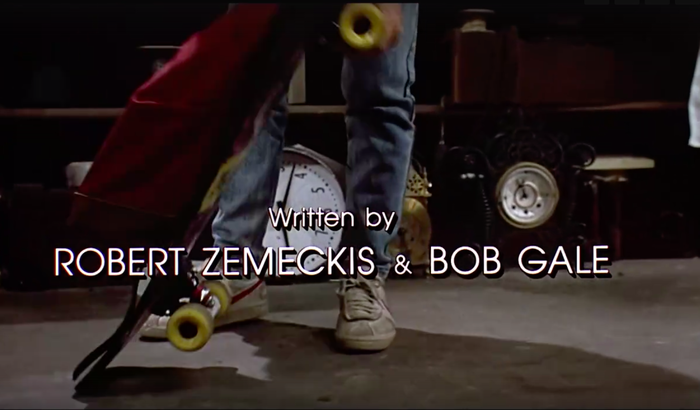
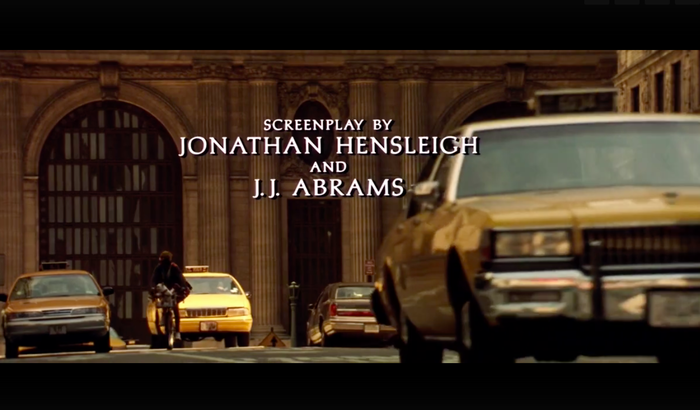
What is the difference between “and” and “&”? The Writers Guild of America explains that “and” means the writers worked separately, while an ampersand signals a unified writing team.[source]
“The word ‘and’ designates that the writers wrote separately and an ampersand (‘&’) denotes a writing team.”
In practice, the ampersand appears only when the writers collaborate simultaneously and share equal responsibility. The word “and” indicates that one writer revised another’s draft — in that case the second name usually reflects the more substantial contribution.
A neat case study is Steven Spielberg’s “The Adventures of Tintin”.
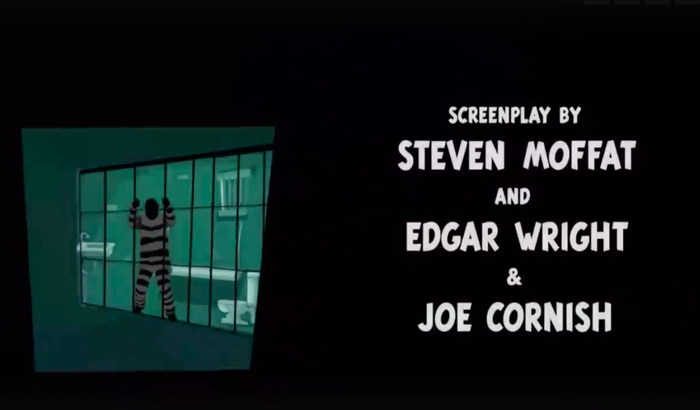
Steven Moffat — yes, the “Doctor Who” and “Sherlock” showrunner — was first on the screenplay, but eventually handed his draft to Edgar Wright. Wright teamed up with Joe Cornish to finish the script, so the final credits read “written by Steven Moffat and Edgar Wright & Joe Cornish”.
“Star Trek IV: The Voyage Home” goes even further with “written by Steve Meerson & Peter Krikes and Harve Bennett & Nicholas Meyer”, spread across three title cards.
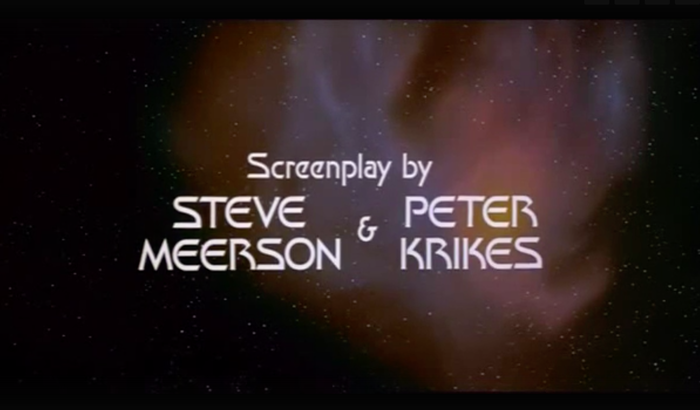
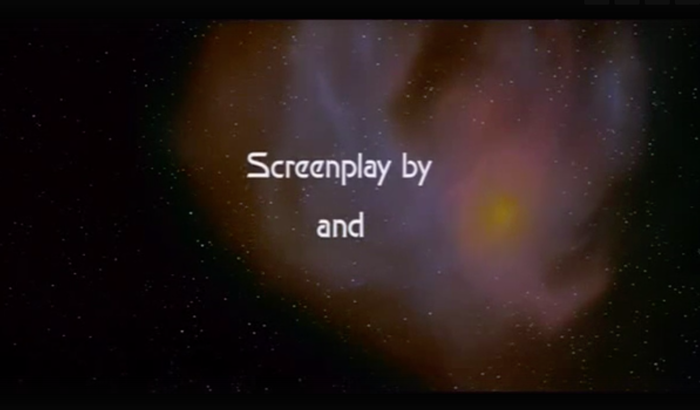
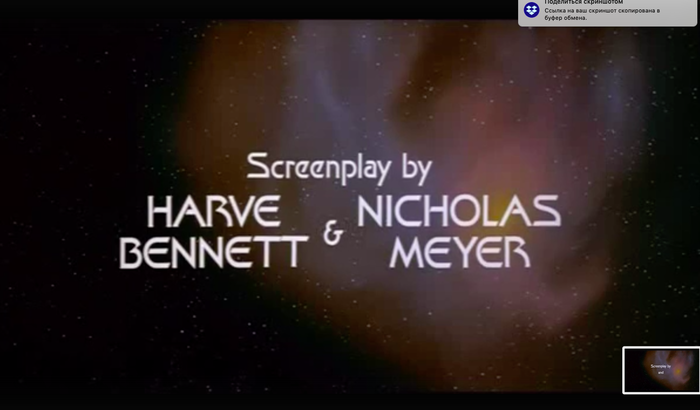
That elaborate wording happened because Meerson and Krikes’s early draft revolved around a comedic character meant for Eddie Murphy. Fans hated the idea and even threatened a boycott, so within twelve days Harve Bennett and Nicholas Meyer rewrote the script, removing Murphy’s role entirely.
P.S. The Guild also regulates other labels just as strictly:
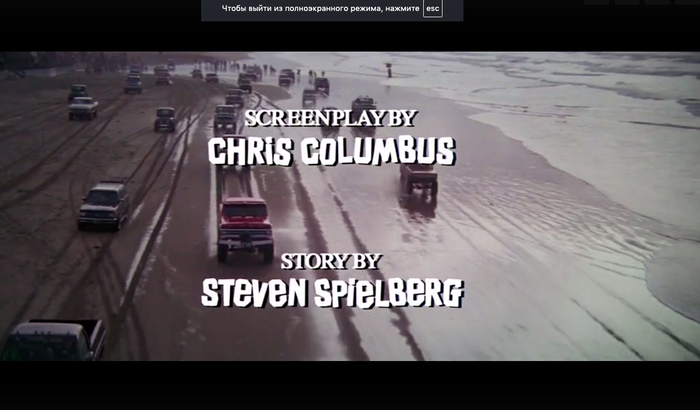
- Story by — credited to those who originated the concept or helped shape the plot while contributing less than 33% of the final screenplay.
- Screenplay by — the writers who delivered the finished scenes and dialogue.
A textbook example is “The Goonies” (1985): Steven Spielberg dreamed up the premise and produced the film, while Chris Columbus turned it into a full script.
- Written by — combines both Story by and Screenplay by, meaning the same team handled the idea and the script itself.
Because these labels determine how writers are paid, the Guild keeps a close eye on the wording.