
Flanderization - why TV series characters become simplified over time and what does The Simpsons have to do with it?
Today I want to talk about an interesting effect in TV series called flanderization. This is when, over the course of a series, a character degrades - down to one exaggerated trait of his, which crowds out all other nuances of the character. And as a result, the hero becomes a caricatured version of himself. I’ll tell you where the phenomenon came from, the main examples and counter-examples.
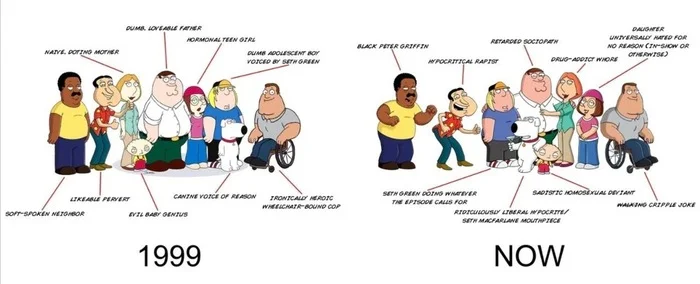
Example of Flanderization of main characters from Family Guy
History of origin
The name of the phenomenon actually came from Ned Flanders from The Simpsons. He started out as a sophisticated and polite “ideal neighbor” (in contrast to Homer), whose faith was only part of his character. But after many seasons, all the traits were lost and Flanders simply became an exaggerated religious fanatic. 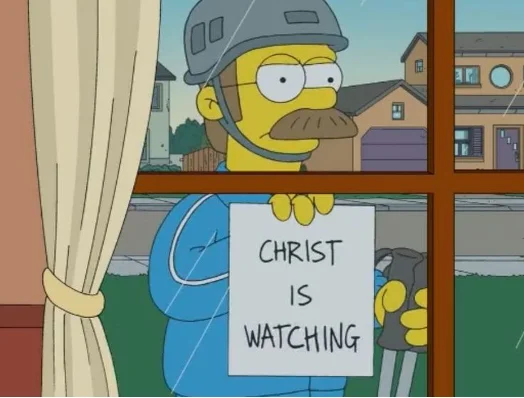
For example, here is the image of Flanders in season 2: he has a cool basement full of all sorts of games, entertainment and even equipped with a bar counter. 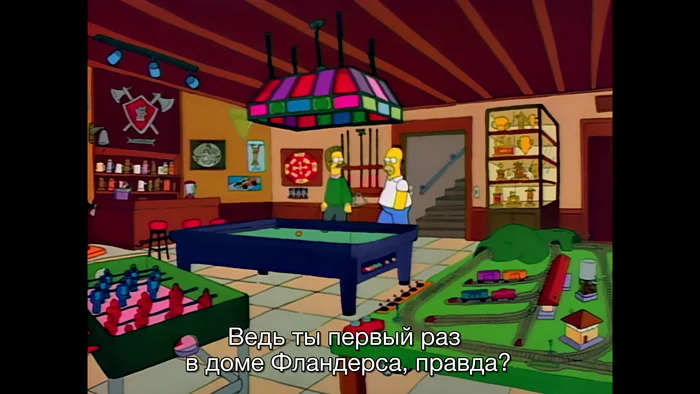
e06s02
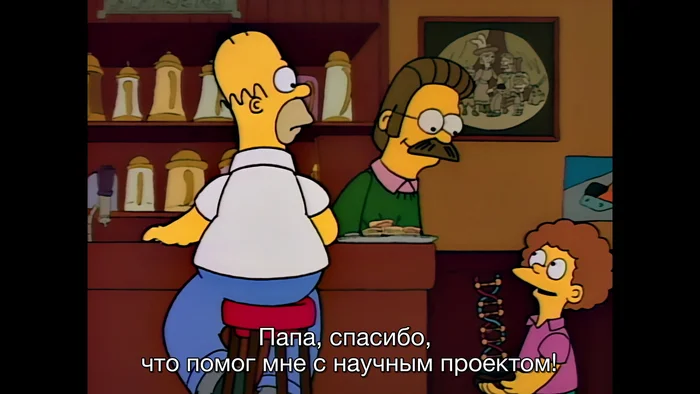
Moreover, he even helps his son with a scientific project (later everything scientific will be perceived by Flanders as dangerous and blasphemous)
Well, here is the image from season 17. It all boiled down to the fact that Flanders is a Christian fanatic who constantly shouts about God. 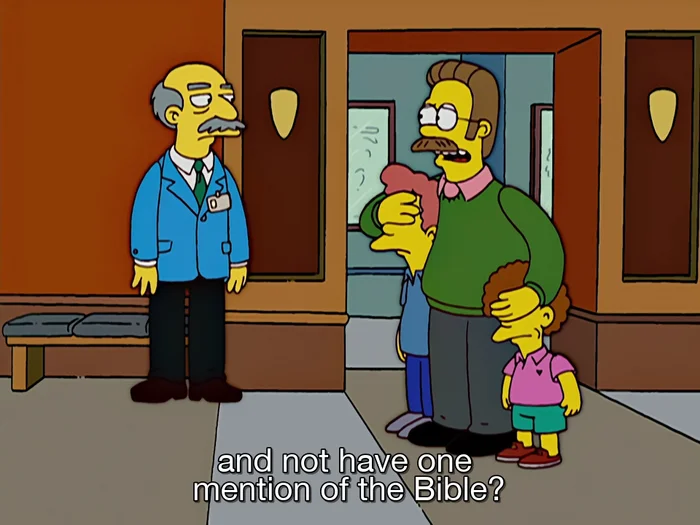
e21s17
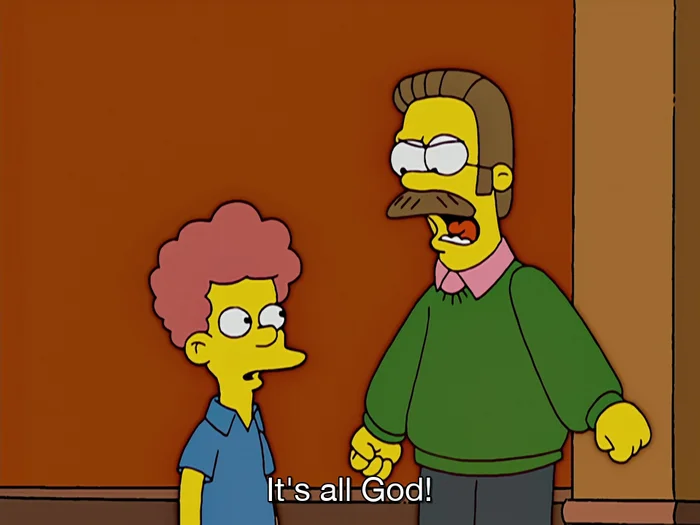
And all the other features of Flanders are hardly shown further in the series. Other classic examples
My favorite examples: Dwight Schrute from The Office. At the start there is an ambiguous careerist who is vain, sycophantic, ambitious, and terribly loyal. In recent seasons, he is simply a radical freak who is responsible for having a crazy opinion on any normal situation. 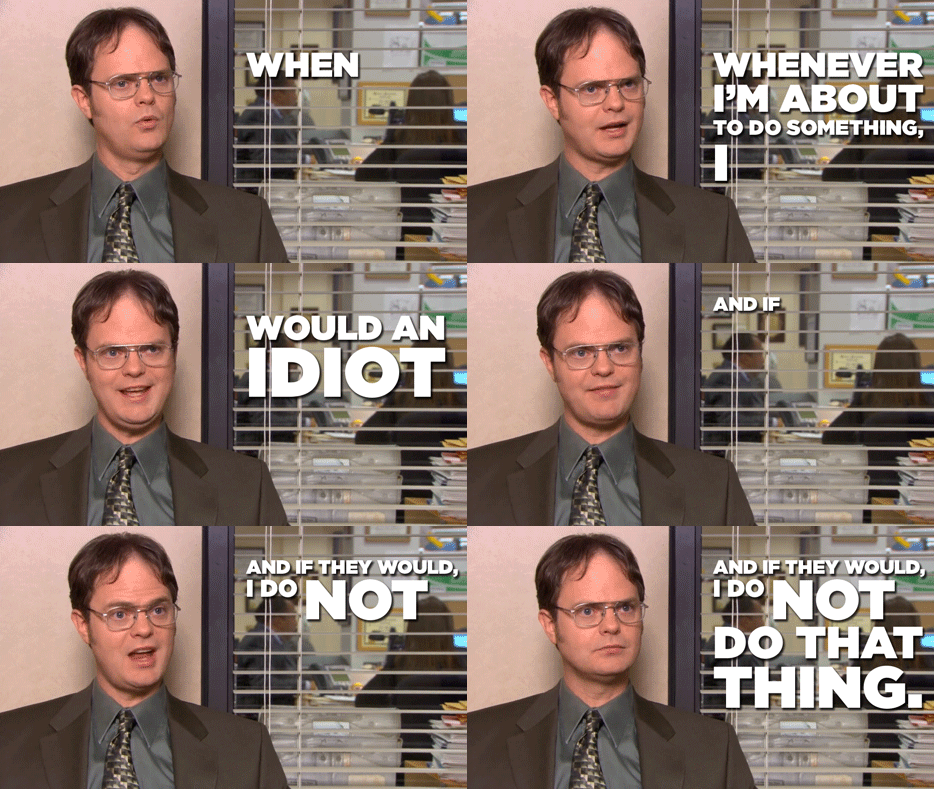
Rajesh from “The Big Bang Theory”: in the first seasons the character has a lot of lines - oppressive parents, multicultural complexes, and complex relationships with girls. By the end of the series, everything is supplanted by the eternal gag about him being a closet gay. 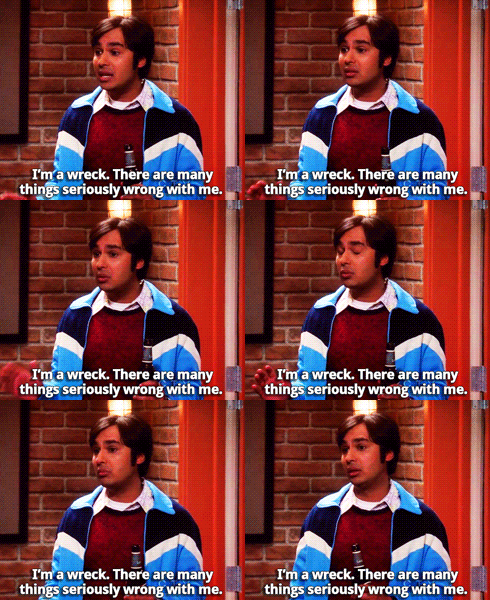
Barney Stinson from “How I Met Your Mother”: at the beginning he is a traumatized and vulnerable character who is afraid of loneliness and because of this tries to get attention (from friends or girls) by any means - but gradually degrades to a horny clown. 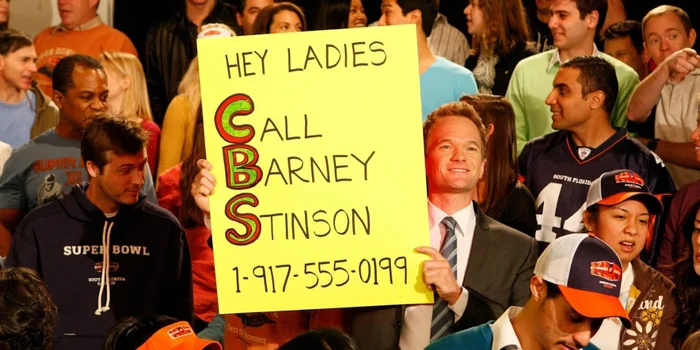
Why is this happening? There are actually two main reasons:
Long production times and tired writers. Sometimes a show has dozens of characters that are physically impossible to fully develop (unless you’re filming The Sopranos). Over time, attention is concentrated on 2-3 characters, the rest are simplified to understandable, repeatable features. Comedy inertia. It’s corny, but it’s hard to write jokes. Therefore, characters are reduced to one of the most striking features on which gags can be constantly built, as if on a conveyor belt. An example is the radical Lisa Simpson, the stupid Joey from Friends. 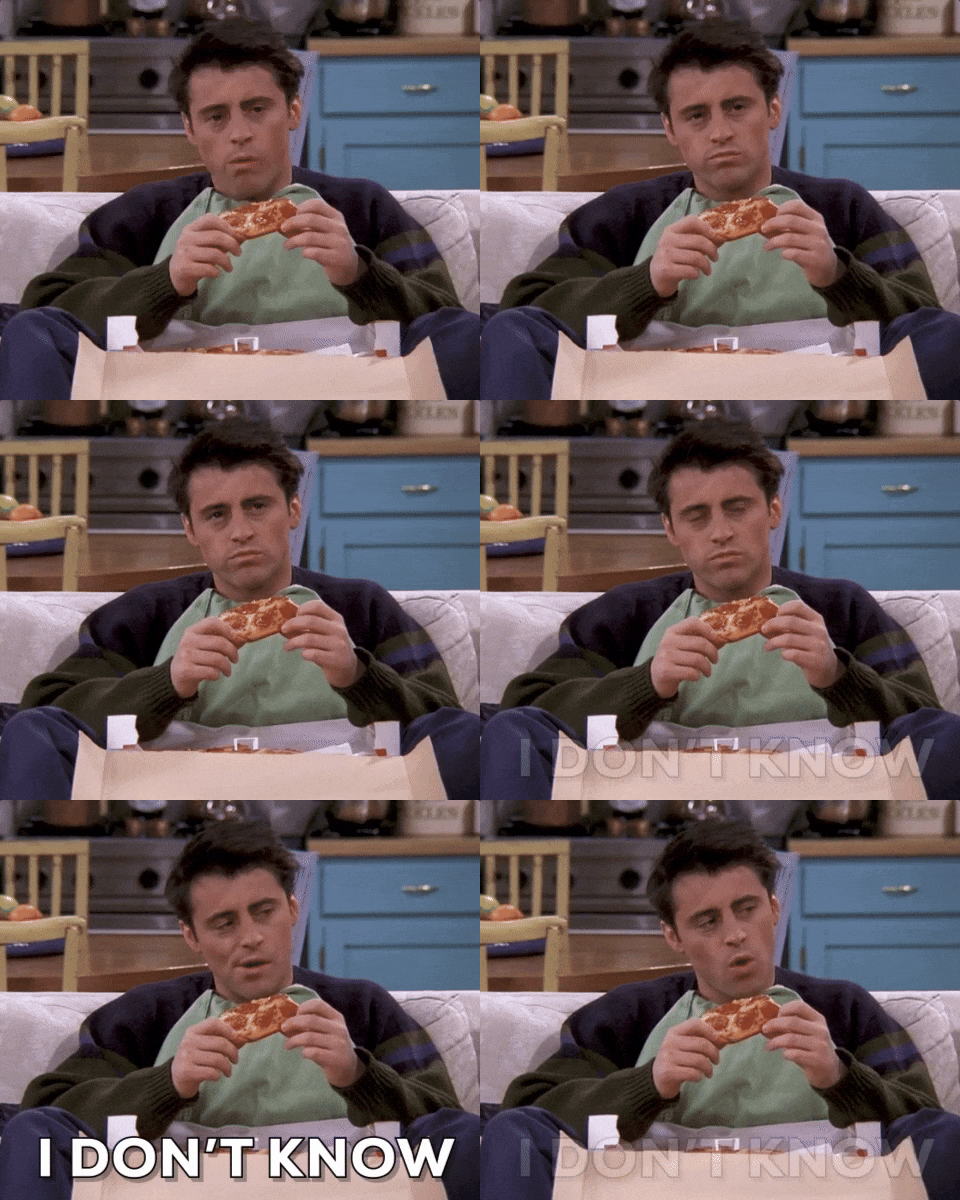
Not only TV series
Interestingly, simplification does not only apply to TV series - for example, Jack Sparrow from Pirates or Thor from Marvel - clearly victims of flanderization. Using the example of Marvel, by the way, you can notice the simplification/primitivization of almost all the characters. Here, with a stretch, one can mention the situation with the simplification of mass media images. For example, Sherlock Holmes or James Bond are deeper characters in literary sources than in most film adaptations or in the mass consciousness. 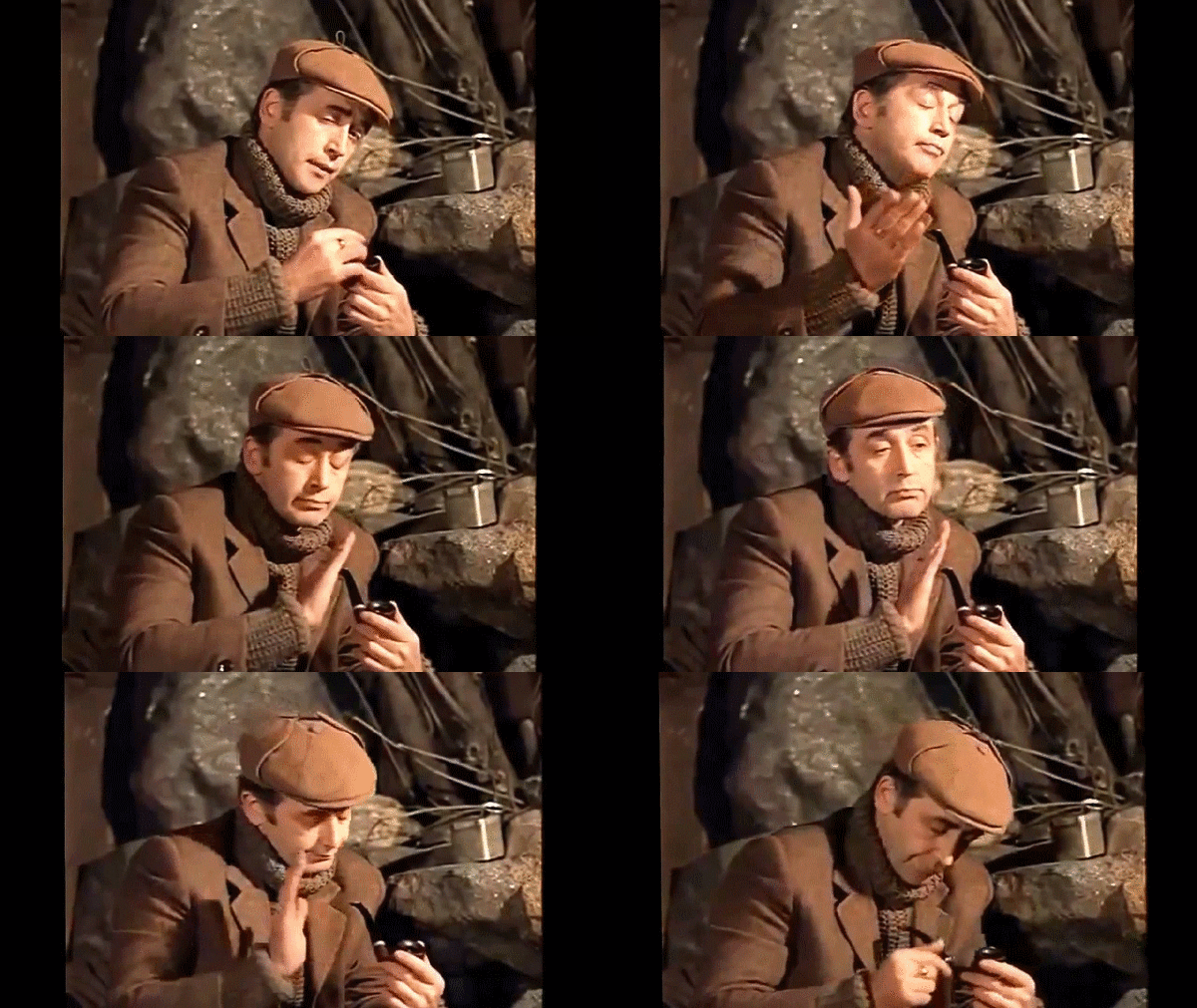
Essentially, flanderization works wherever there is multiple repetition - this almost always leads to simplification and halftones are lost along the way. Un-flanderization
Another important idea is that eccentricity should not be confused with flanderization (although it can be very similar). A classic example is the characters of “South Park”. Yes, Randy Marsh or Cartman are indeed exaggerated sources of chaos - but they were stated as such in the beginning. 
I will express my opinion - I also disagree when Michael from “The Office” is cited as a clear example of flanderization. Yes, there was a big change between seasons 1 and 2, where Michael was given more vulnerability and awkwardness so that the original character was not so off-putting. But then, until the end of his arc, Mike does not lose his traits (eccentricity, narrow-mindedness and optimism), essentially remaining the same as he was stated at the beginning. 
Not always bad
The important point is that Flanderization is not always a bad thing. There is an example with Hannibal Lecter (I’m more about the book image). 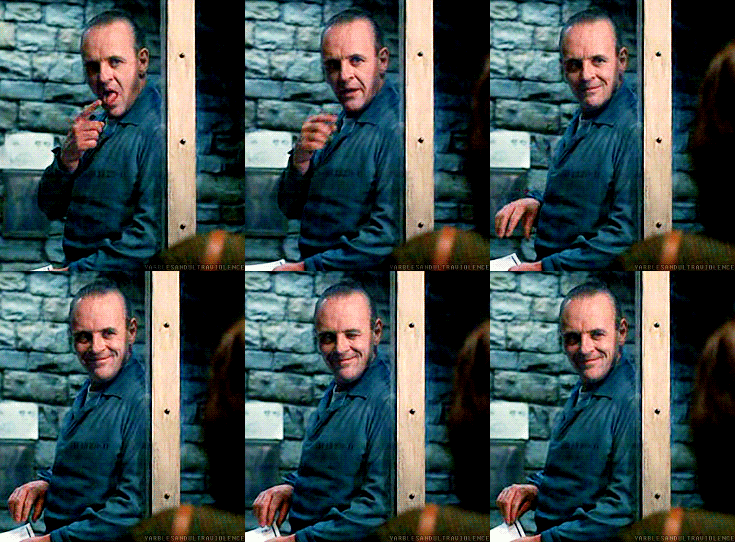
In the first episode, “Red Dragon”, Lecter is shown as an intelligent and sarcastic man, whose knowledge of psychiatry makes him an extremely dangerous criminal. In The Silence of the Lambs, he becomes almost the greatest psychiatrist in the United States, who has treated all other serial killers in the country. Well, in “Hannibal” he is simply synonymous with ominous rock, elusive and unattainable. On the one hand, we clearly see the degradation and simplification of the image. On the other hand, it was the more simplified image from “Silence of the Lambs” that became iconic.
Reverse Flanderization
Well, in the end, I would like to note that characters in TV series do not always deteriorate over time. Actually, “The Office” again! Jim Halpert is initially billed as simply a sarcastic “normal guy” (whose main function is to react appropriately to the antics of Michael or Dwight, to create his signature comedic awkwardness). 
But over time, Jim gains new character traits such as ambition and indecision, and with this complex conflicts and ambiguous situations. However, in fairness, the term “reverse flanderization” sounds redundant when there is already an understandable term “character development” :)