
It’s funny how several cult films released in the same year — 1999 — were united by one motif: everyday routine drives the protagonists insane, and they look for any way to escape it.
A bit of context. The 1990s were a rough period for the United States. The 1980s marked a turning point: the era of hippies and rebellion was not crushed by tanks, but by office culture, Wall Street, and the image of the successful yuppie. The new ideology brought little besides cynicism and social tension, and by the time the country entered the next decade it had collected a couple of wars (Yugoslavia, the US joining the conflict in Kuwait) and major internal conflicts (the LA riots, the Waco massacre, the Oklahoma City bombing).

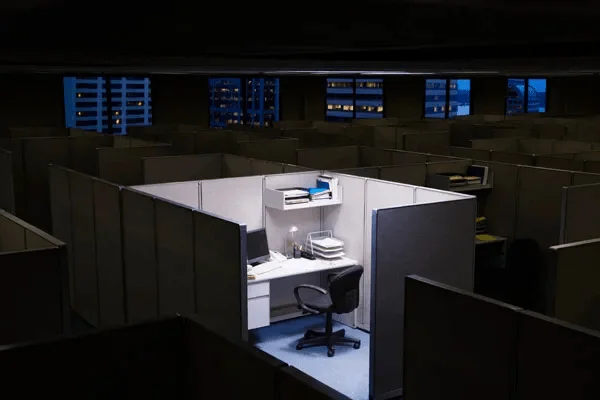
Add the anxiety ahead of the millennium and it becomes clear why there was a growing demand for freedom in the broadest sense. The symbol of captivity was obviously the office-as-prison.
Hollywood responded to these moods — and, interestingly, did so all in the same year, 1999.
Fight Club
I wanted to destroy something beautiful…
“Fight Club” shows how Edward Norton’s character loses it amid plastic emptiness and disposable sameness.
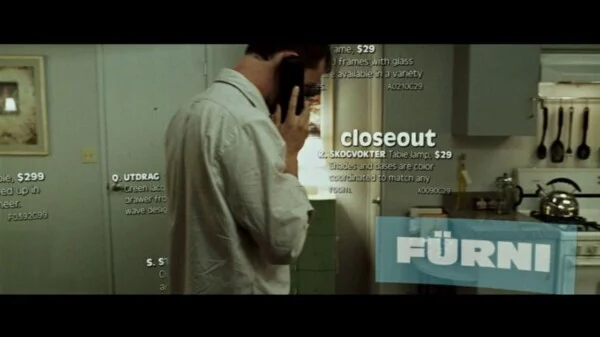
The only path to change is through destruction and self-destruction — the sole way to feel alive.
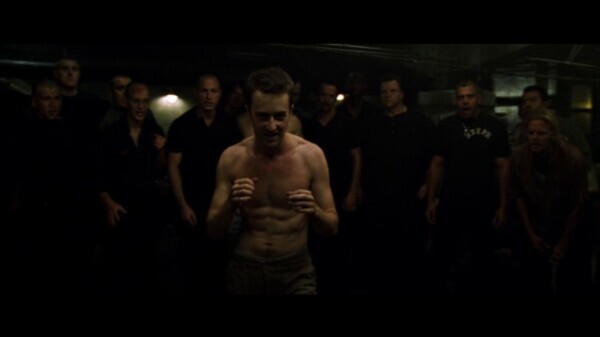
In the finale the narrator blows up bank skyscrapers — an open challenge to the system and to office slavery.
American Beauty
My wife and daughter think I’m this gigantic loser. And in a way, they’re right. But I wasn’t always this way.
For Lester Burnham, life is pure lack of freedom. Even visually he’s constantly framed inside cages of obligations and limitations.
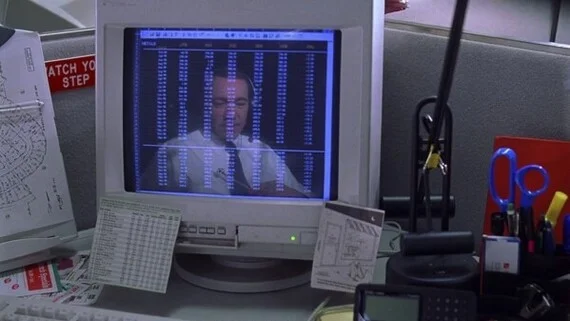
His “escape” comes from rejecting the status quo. The burst of feeling toward a teenage girl pushes Lester to abandon those obligations, and — ignoring what others think — he finally breathes freely, even if just for a moment.

The Matrix
Follow the white rabbit.
“The Matrix” depicts the dullness of life literally via a greenish filter, underlining that every person in the Matrix is just a cog — or more precisely, a battery.
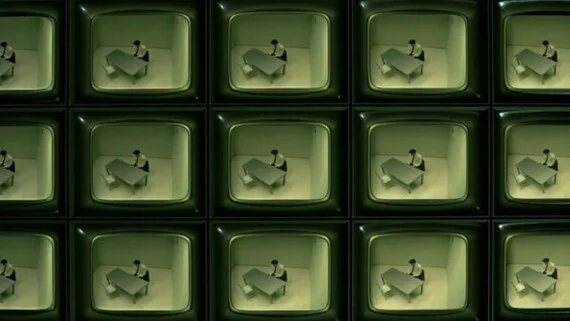
And the escape requires making perhaps the most famous choice in movie history.
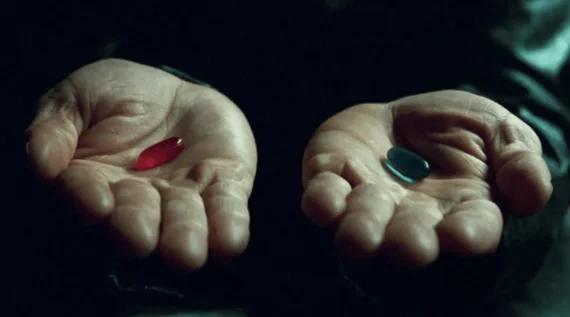
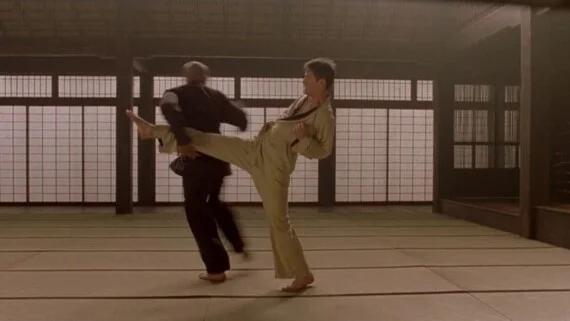
A blue pill means a cozy, boring life resumes; the red pill brings a leap of faith into a new reality. Neo, an office worker, obviously chooses the red one, and everything becomes much more exciting:
The common thread
Remember the notion of the office as a symbol of captivity. All three films include almost the same scene: the boss in his office, irritated with the protagonist and acting superior — even the camera angles match.
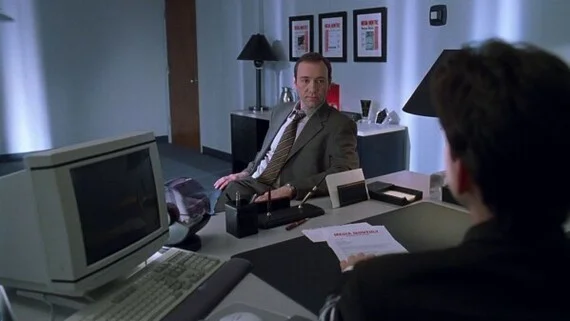
Even “Magnolia” (also from 1999, of course) offers a similar shot.

Office Space
Visually, the entire “escape from routine” idea can be summed up by a blissful sequence from “Office Space.” Can you guess the release year?
If you stretch the thought, even “Star Wars: Episode I” touches on the same theme, freeing Anakin from his Tatooine “office” slavery. After that burst, the topic cooled off for a few years, replaced by large blockbuster franchises (“Pirates of the Caribbean,” “The Lord of the Rings,” “Harry Potter”) or teen comedies. Incidentally, “American Pie” also dropped in 1999.
P.S.
Many consider 1999 the best year in film history. A non-exhaustive list of releases: “Fight Club,” “American Beauty,” “Office Space,” “The Blair Witch Project,” “The Sixth Sense,” “Toy Story 2,” “Magnolia,” “The Mummy,” “All About My Mother,” “The Talented Mr. Ripley,” “The Green Mile,” “Tarzan,” “American Pie,” “Rosetta,” “The Iron Giant,” “The Boondock Saints,” “Cruel Intentions,” “Dogma,” “Eyes Wide Shut,” “Run Lola Run,” “Analyze This,” “Being John Malkovich,” “The Matrix,” and so on.
There’s even a great book on the topic — “Best. Movie. Year. Ever.: How 1999 Blew Up the Big Screen.” Highly recommended.