
Today I’ll tell you how copyright issues were handled a hundred years ago. There was Georges Méliès — one of the first great filmmakers, an inventor, and essentially the “father” of modern cinema.
You could say it like this: the Lumière brothers were pioneers of cinema’s technical side, Thomas Edison — the commercial side, and Méliès — the creative side. His story is retold in a somewhat fairy-tale style by Martin Scorsese in “Hugo.”
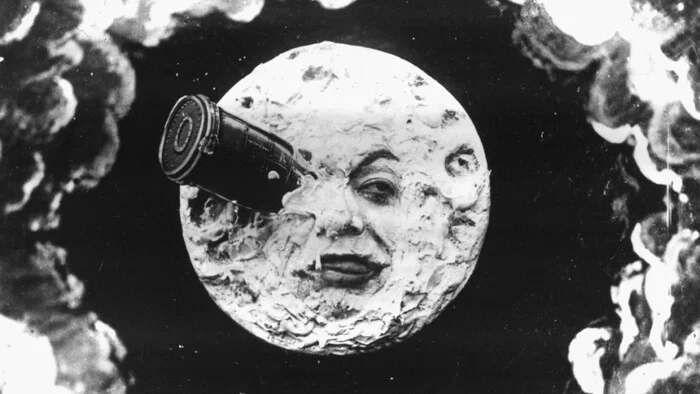
In 1902, Méliès made the cult classic “A Trip to the Moon” (one of the first science fiction films with grand scope, the famous shot of the rocket hitting the Moon’s eye, etc.).
The film was a huge success and essentially became the first international hit.
And, of course, it made excellent money.
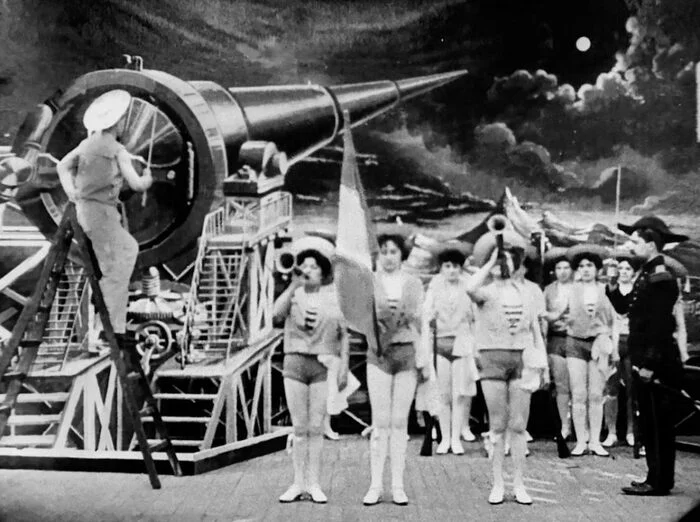
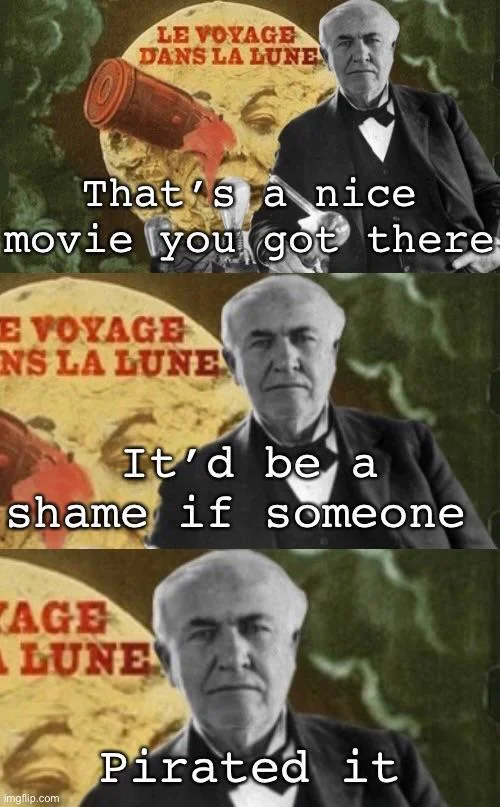
Here’s the catch — Méliès never saw most of that money! Because in the largest market (the USA), Thomas Edison was distributing his pirated version.
Edison (not personally, but someone from his company) simply copied one of the European distribution prints of “A Trip to the Moon” and showed it in the USA (formally, there were no laws prohibiting such a thing).
Méliès tried to fight this, opened a branch of his film studio in the USA, but it was too late. Later, Méliès’ studio went bankrupt (due to the war in Europe and because it couldn’t properly capture the US market).
About patents of that time
By the way, it’s interesting that at that time, it wasn’t the films themselves that were patented, but the technologies (film stock and cameras). Formally, Edison couldn’t distribute Méliès’ film — so he copied it.
Edison was generally a super shark from a commercial standpoint — in 1908 he founded the Motion Picture Patents Company (MPPC, which is sometimes simply called the Edison Trust). The trust owned all patents for perforated film stock in the USA (meaning this affected literally all films of that time).
Edison used a similar principle (patent pressure) almost everywhere — for example, in the famous “War of Currents” with George Westinghouse and Nikola Tesla.
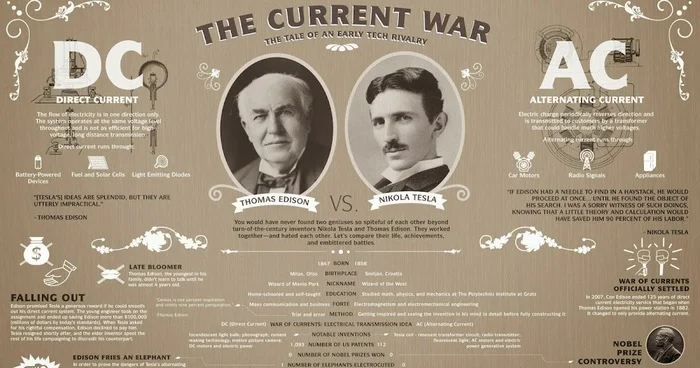
By the way, in English, alternating current/direct current is abbreviated as AC/DC. This is exactly what became the source for the rock band AC/DC’s name.
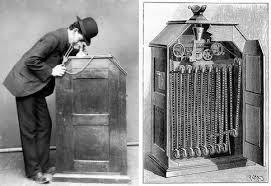
What’s interesting — initially, Edison developed the kinetoscope — a device that allowed viewing short films through a peephole. And this was more like YouTube — all viewings were individual.
People paid for sessions, kinetoscopes were displayed in entertainment centers and at fairs. So honestly, we need to admit — in 1893, Edison was the first to invent commercial film distribution, a couple of years before the Lumière brothers (the screening on the Boulevard des Capucines was in 1895).
But later (especially after the successes of the Lumière brothers and Méliès in Europe in the late 1890s), Edison switched to public film screenings in theaters, under the aegis of his company (MPPC). All the major film studios of that time joined the cartel, and they literally sued all filmmakers outside the cartel.
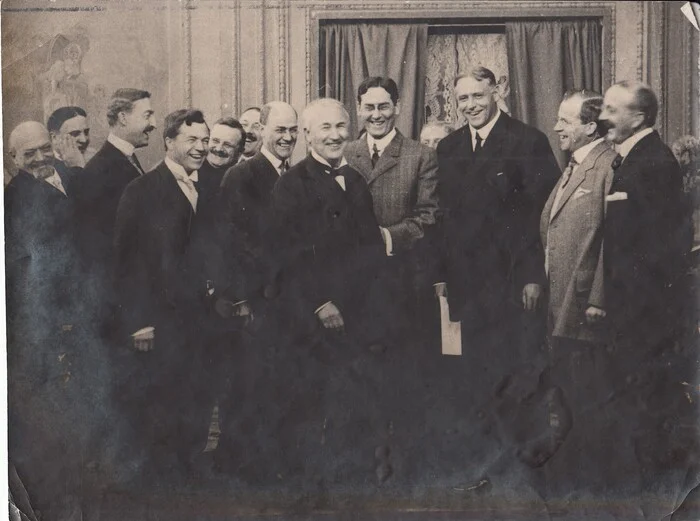
Looking at you like an independent filmmaker
As a result, the remaining filmmakers mass-migrated from New York to the western USA, where control was weaker. And they began creating films there to compete with Edison.
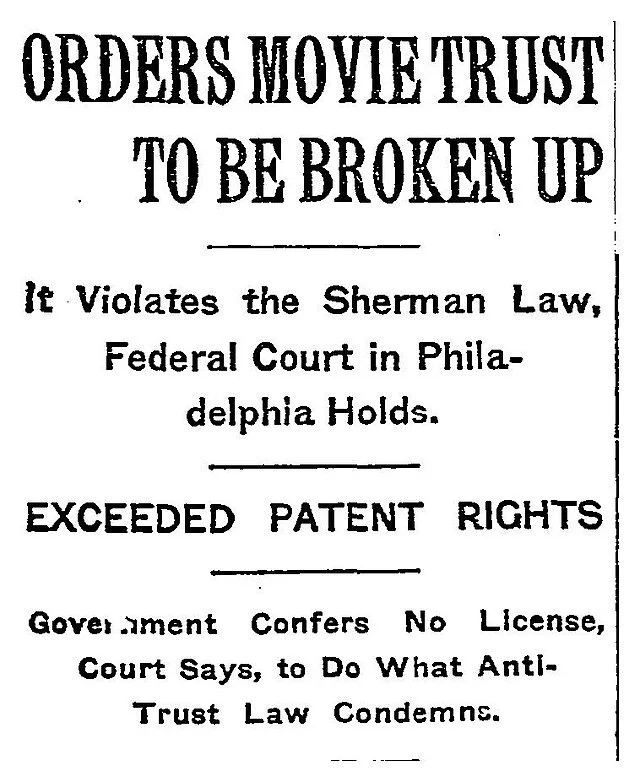
And in 1915, the US Supreme Court recognized MPPC as an illegal cartel and monopoly and ordered the company to be dissolved.
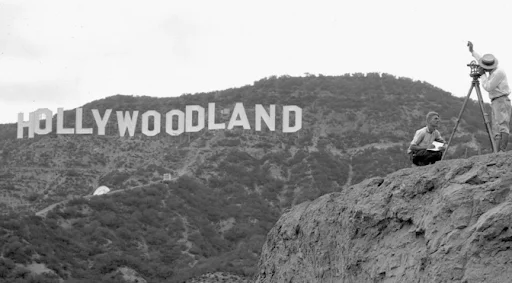
And that place where the filmmakers moved, we still know by the name “Hollywood,” but that’s a completely different story.