
Richard Linklater’s productivity is nothing short of enviable: in the past year alone, two films by the American director were shown at European festivals — Blue Moon in Berlin and New Wave in Cannes. At first glance the two pictures could not seem more different, yet it is hard to miss how their stories echo each other: Jean-Luc Godard is about to make a masterpiece and inscribe his name in cinema history forever, while the lyricist Lorenz Hart, by contrast, looks back wistfully at the past and meets the sunset of his career.
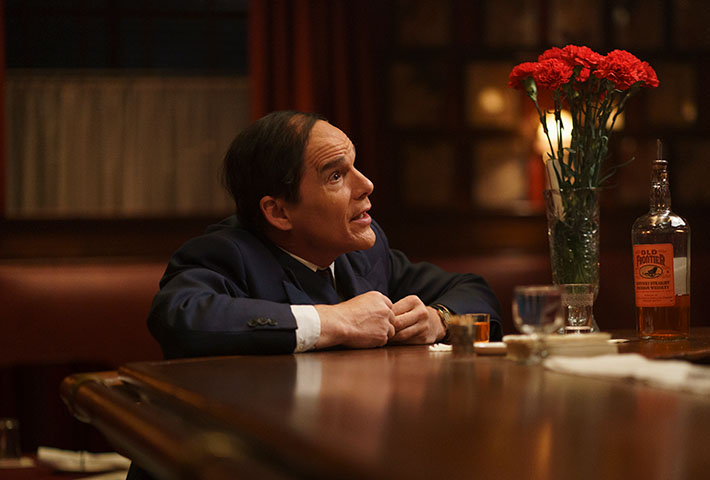
Blue Moon is the title of a song written in the 1930s by composer Richard Rodgers to lyrics by Lorenz Hart. The duo of these extraordinary creators is the heart of the film, which at times feels like a theatrical production (and that is a wonderful thing!). The film opens on a dark note: Hart (Ethan Hawke) collapses in an alleyway, and a voice-over tells the audience of the poet’s imminent death.
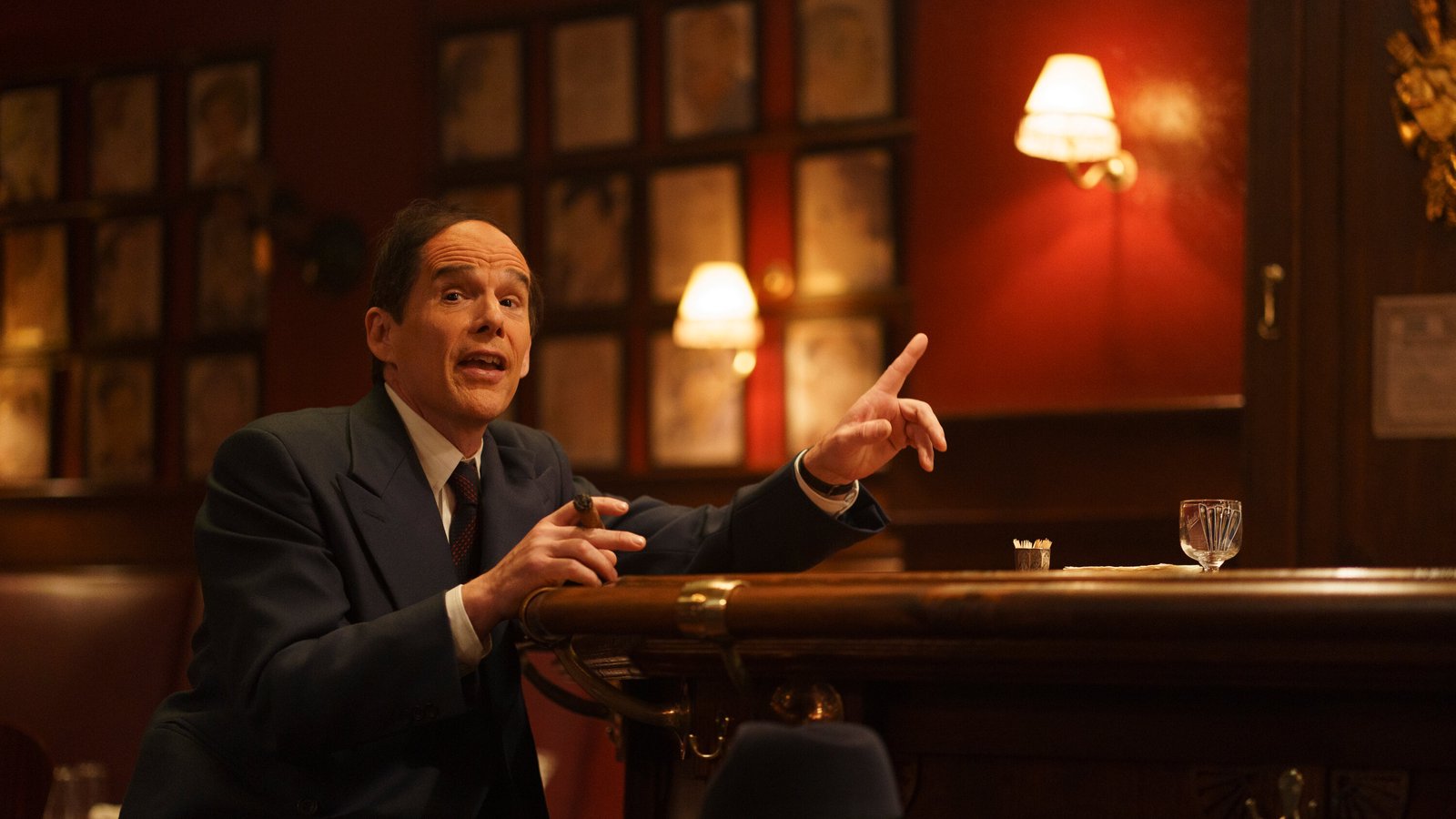
But the fateful night is still seven months away: the calendar reads March 31, 1943, on the Broadway stage of Oklahoma!, in a half-empty bar — the talkative Lorenz. Oklahoma! is the first collaboration of Richard Rodgers (Andrew Scott) and Oscar Hammerstein (Simon Delaney). Rodgers had once written hits with Hart, but now the colleagues have gone their separate ways. Soon the theatre company will arrive at the bar to celebrate the triumph. However much Lorenz tries to share in his friend’s dizzying success, hiding his bitterness is another matter.
The historical context of Blue Moon might seem to hardly matter. You need not know the names or be a musical buff to fall under the film’s spell. Still, a few words about the making of the project and the authenticity of the story feel in order. The idea for Blue Moon belongs to screenwriter Robert Kaplow, who worked on the script for about 12 years. On screen it is closer to fantasy than to faithful reconstruction. Yes, Lorenz Hart did attend the premiere of Oklahoma!, but whether the poet made it to the after-party remains unknown.
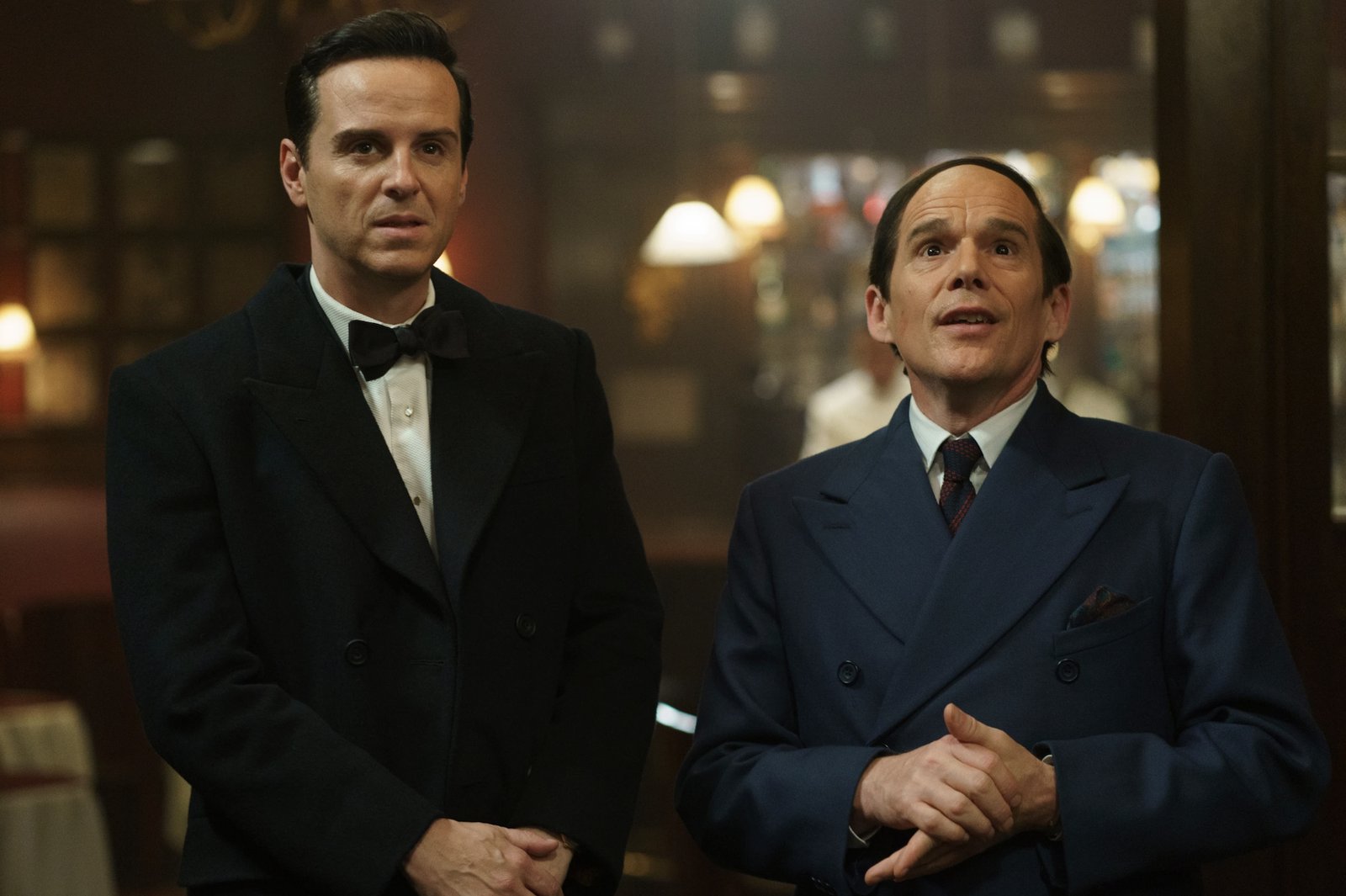
Richard Linklater makes deeply intimate talk-driven cinema. The setting is an elegant New York bar: no wonder the characters keep recalling and quoting Casablanca. Over the course of one evening Lorenz Hart finds time to share his thoughts with old acquaintances and chance passers-by: the bartender (Bobby Cannavale) listens carefully and refuses to refill his glass (Hart struggled with alcoholism), the essayist E. B. White (Patrick Kennedy) numbs his own heartache and nods with understanding, a flower delivery man (Giles Serridge) tries to remember who this Hart fellow is, and a young pianist (Jonah Lees) hopes he will introduce him to the famous Richard Rodgers.
For Lorenz the evening is fraught not only because he must watch a close friend live the dream without him. His heart beats faster in anticipation of Elizabeth (Margaret Qualley) — a young student he cannot stop talking about. She is his muse, his protégée, the girl of his dreams. Though Hart longs for love, their relationship remains purely platonic. Margaret Qualley’s character may seem invented, but that is not quite so: the young woman is based on a real figure — Kaplow obtained copies of letters sent to Hart by a certain Elizabeth Vailand.
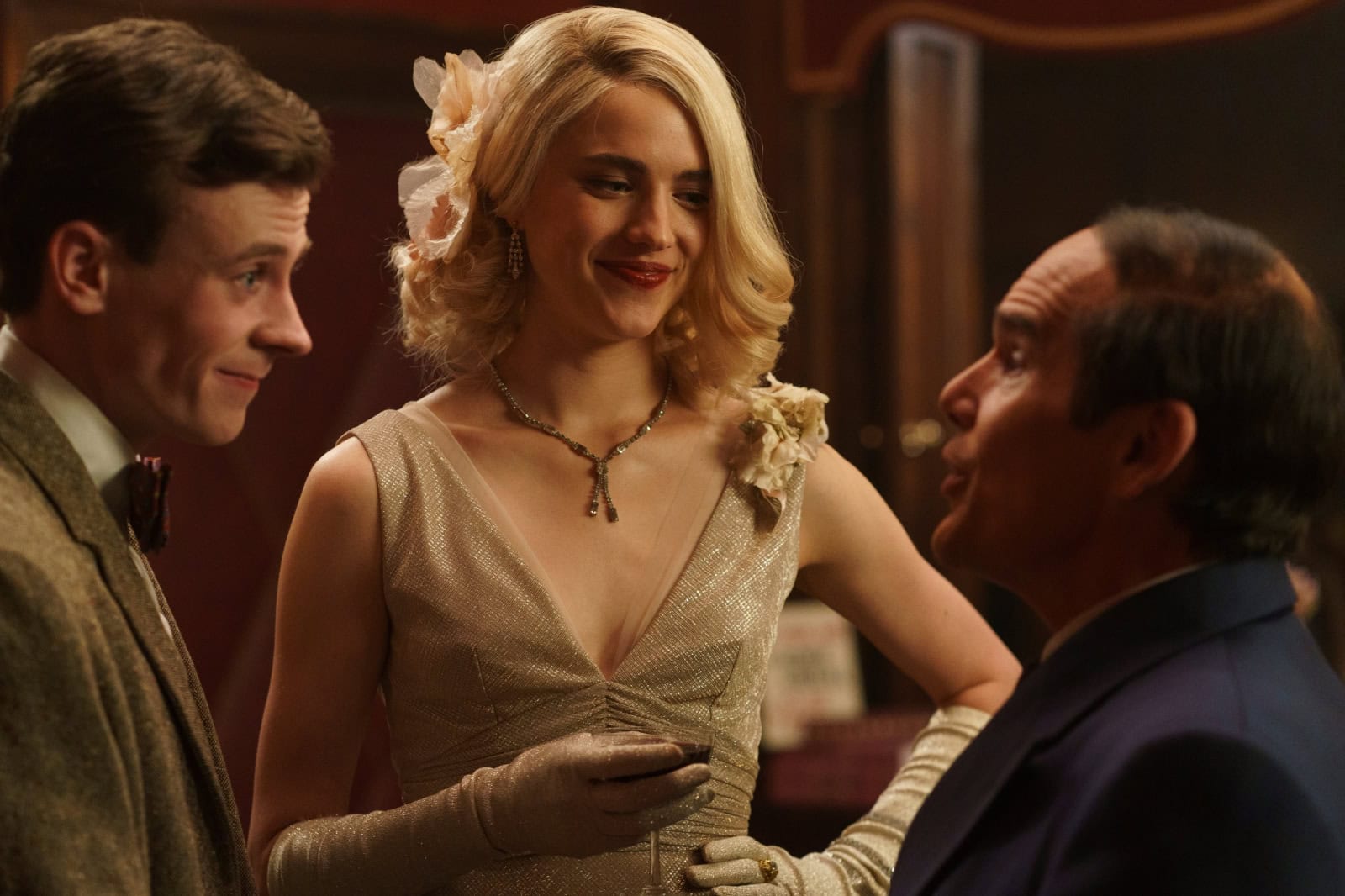
Lorenz Hart tries to discuss future productions with Richard Rodgers, but in truth the whole evening is the poet’s farewell to his career and an attempt to accept a harsh truth: Hart’s time is long past. With his characteristic tenderness and craft, Linklater captures the spirit of the age and in an hour and a half, within a confined setting, shows the end of an era — is that not the magic of cinema? Hart must say goodbye not only to the slipping years of glory but also to his partner.
Rodgers has moved to a new stage of his professional life; great things await the composer (The Sound of Music, for one), and the star of the evening barely has a moment for Lorenz. Andrew Scott won the Silver Bear for his performance: we rarely get to see such a finely tuned turn in a supporting role. Linklater does not bother with the duo’s backstory. A few lines and Scott’s weary eyes are enough to understand: working side by side with an impulsive genius of a poet is at once a gift of fate and a true trial.
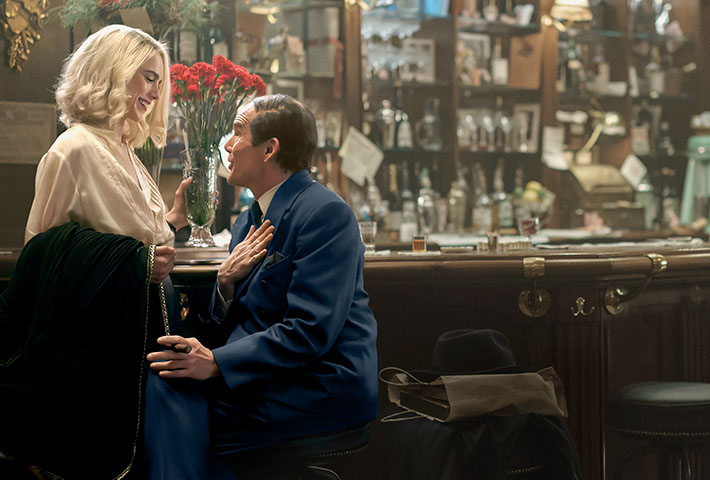
Over the course of this long evening Lorenz will exchange a few words with a would-be director named George Hill. The poet will give the youngster advice: make films not about love, but about friendship. It seems that is what Linklater’s film is really about — the joys of camaraderie, of creating together, and of a heart broken by the closing of another chapter. Perhaps George Hill is a nod to George Roy Hill, who won an Oscar for Butch Cassidy and the Sundance Kid, a gangster film about male friendship.
Blue Moon is full of such homages. One can also spot an obvious hint at Ethan Hawke’s character’s fate in the film’s title: the song goes You saw me standin’ alone, without a dream in my heart, without a love of my own. The lyrics describe its author very well — a poet who never stops talking and is deeply sad, a man who no longer has a place in the celebration of life. Who laughs — but only so as not to cry.