
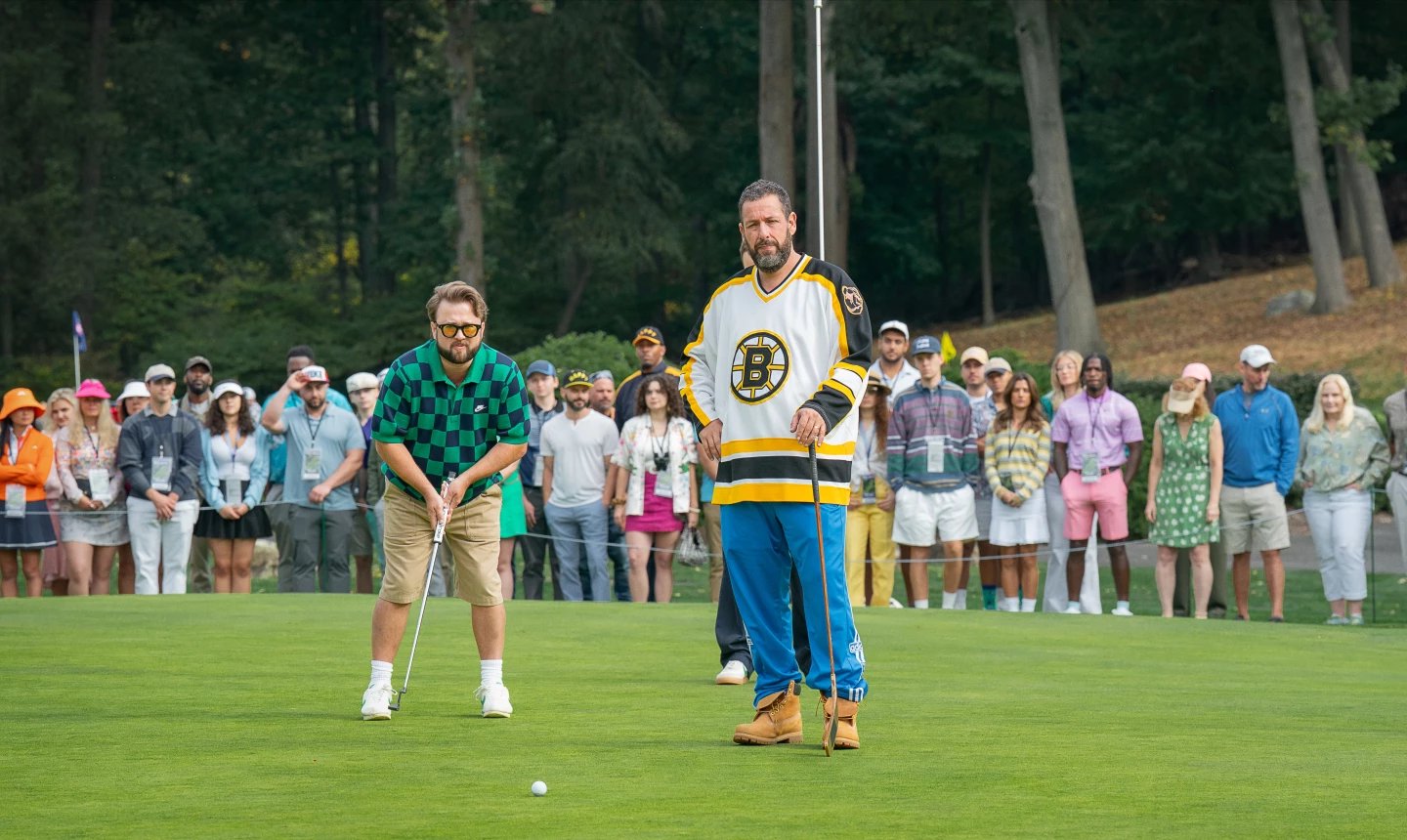
Thirty years after the original “Happy Gilmore,” Adam Sandler returns to the golf course. Happy Gilmore is now in the Hall of Fame, but life after triumph hasn’t been rosy: wife Virginia (Julie Bowen) has given birth to five children, and the hero himself has lost interest in the sport and fallen into financial ruin. To pay for daughter Vienna’s (Sunny Sandler) tuition at a Paris ballet school, Gilmore needs $300,000 — and the only way to get that money fast is to return to golf.
The plot kicks off rather absurdly: an important character dies in the first few minutes, allowing the writers to quickly shift the hero from success to despair. Gilmore works at a supermarket, hiding alcohol in the most unexpected places — from cucumbers to TV remotes. This gag quickly becomes obsessive and tiresome, but it’s what pushes the hero toward his comeback.
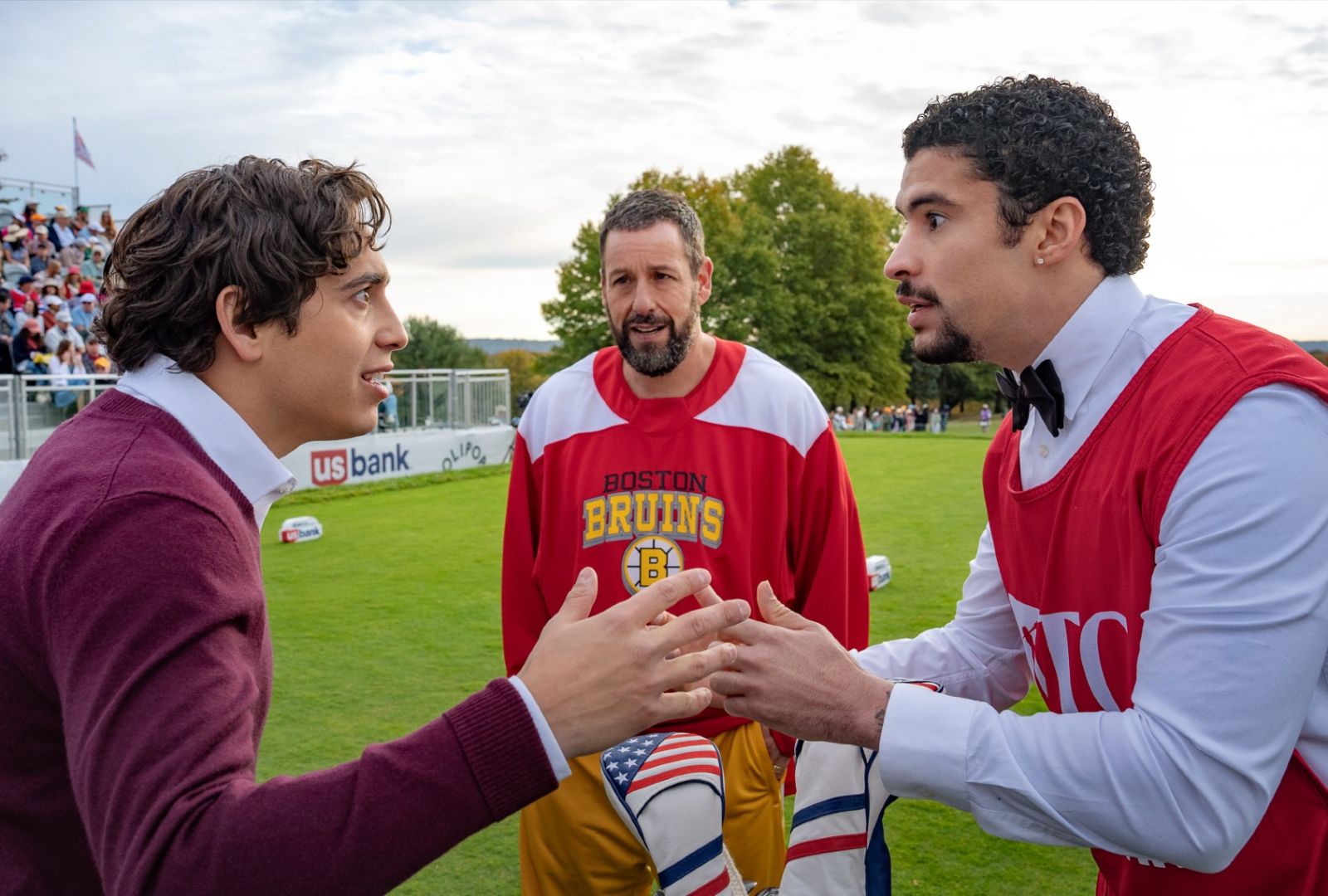
A new “Maxi Golf” tournament appears — a trendy version of the ancient game created by young businessman Frank Manati (Benny Safdie) to attract young people. The irony is that Manati was inspired by Gilmore’s own innovative approach, but now the hero must fight a corporate monster that has turned his style into a product. Gilmore teams up with former rivals, including Shooter McGavin (Christopher McDonald), who spent time in a psychiatric facility after his defeat.
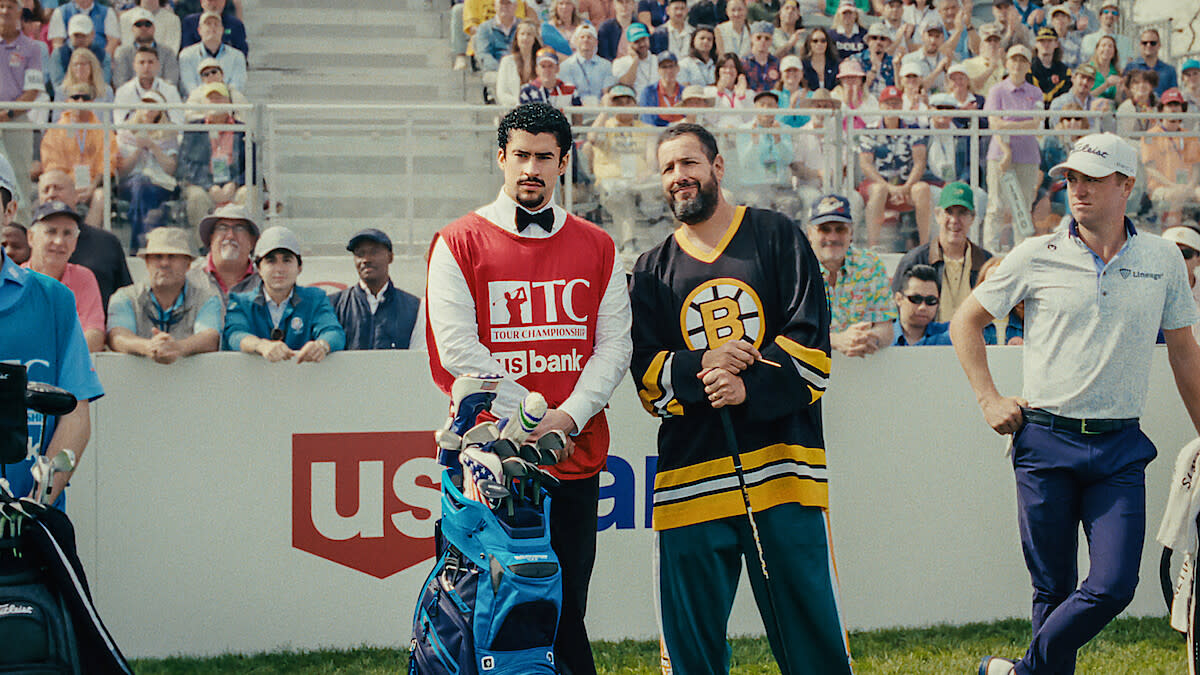
Director Kyle Newacheck, known for “What We Do in the Shadows” and “Murder Mystery,” is technically behind the camera, but the authorial voice here belongs entirely to Sandler. The 1996 “Happy Gilmore” was the actor’s ticket to the big leagues — the story of an aggressive upstart who dreamed of hockey but became a golfer, playing in work boots and constantly breaking things. The film turned a sports drama into an apotheosis of physical comedy, where the hero hit, choked, and screamed, but drove balls with such force that audiences forgave him any antics.
In the sequel, the message remains humanistic — the future of his daughter and the fate of his beloved sport are at stake. But the hero’s problems have become more current: he struggles with alcoholism, aging, and loss of self-belief. Gilmore still swears and breaks clubs, but does so with sadness in his eyes and more out of habit than passion. The filmmakers face similar challenges: “Happy Gilmore 2” feels forced and strained, lacking the original’s verve.
The cast works professionally, but the plot falls apart into episodes of varying absurdity. What happens feels like a class reunion: everyone is happy to see each other, smiles never leave faces, a couple of good jokes slip through, but after an hour and a half it becomes clear that the whole venture was mainly so Sandler could catch up with friends despite a busy schedule.
The film becomes a cameo comedy: Ben Stiller and Kevin Nealon return to their roles, Benny Safdie plays the villain, rapper Bad Bunny becomes Gilmore’s caddy, and episodes feature professional athletes, musicians, Rob Schneider, Steve Buscemi, and even Eminem repeating the part of the late Joe Flaherty. If you set aside the therapeutic effect for the creators, “Happy Gilmore 2” can be counted among the most unnecessary sequels in history — a film stuck in the past that doesn’t even try to match the spirit of the times.