

Director Paul Feig, who for many years has been wandering between romantic comedies (“Christmas for Two”), cartoonish action films (“Jackpot”) and thrillers with elements of dark humor (“A Simple Favor”), this time tries to outdo himself and give the viewer three in one - at the same time a love story, a detective story and an ironic meta-commentary on the genre. The new work is based on Frieda McFadden’s bestselling book of the same name, and its literary origins are emphasized by the presence of chapters and partial first-person voiceover narration.
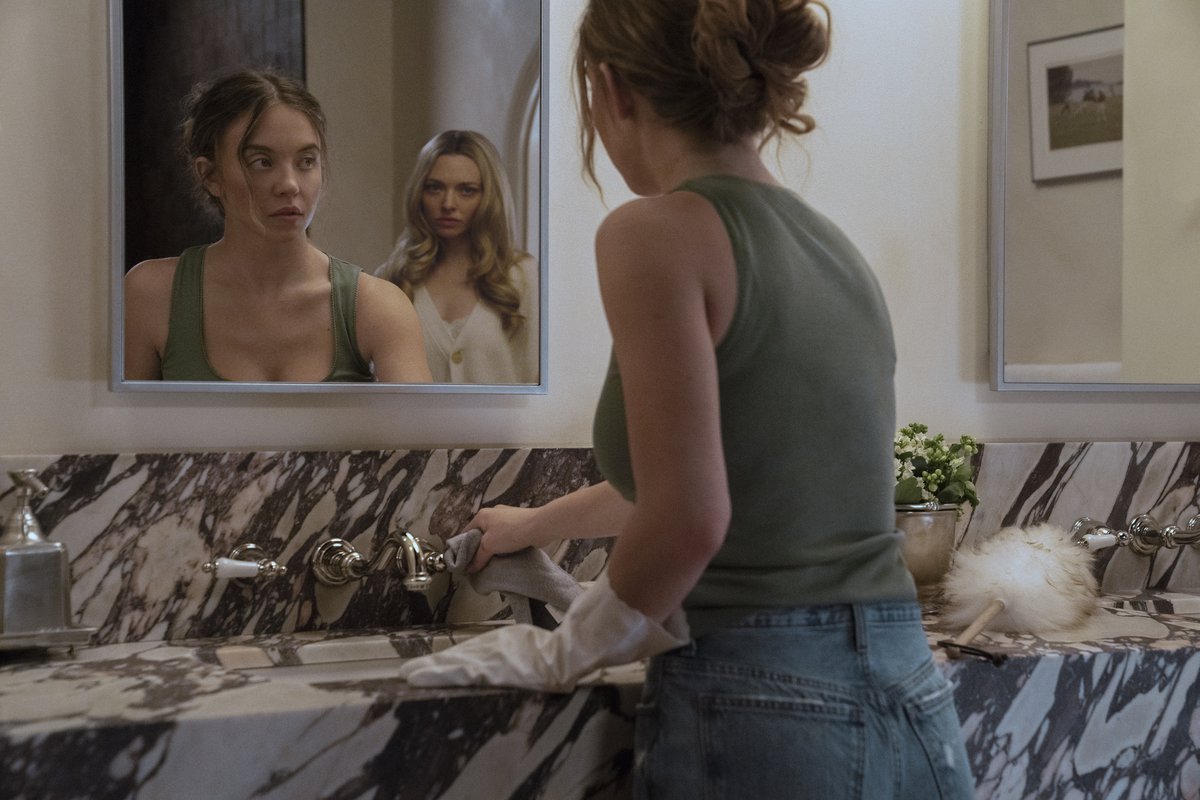
Millie (Sydney Sweeney) lives in her car. Just a couple of weeks ago, she was serving time for an unnamed crime, and now, in order to remain free, she will have to fulfill a couple of parole conditions. First, find housing and work. To look more serious, Millie buys glasses and goes for an interview at the luxurious Winchester mansion, who are looking for a maid. The house is a showpiece of well-being and cleanliness, and Millie even doubts that spouses Nina (Amanda Seyfried) and Andrew (Brandon Sklenar) really need more help. The day after Millie finds out she got the job, the catch becomes clear: Nina throws a tantrum over the missing document and turns the house upside down. Millie gets to work.
If “A Simple Favor” can, with reservations, be called a continuation of David Fincher’s “Gone Girl,” then “The Housemaid” clearly inherits Sam Taylor-Johnson’s “Fifty Shades of Gray.” Fig does not hesitate to exploit Sweeney’s sexuality, dressing her in tight tank tops and short shorts, and then placing the heroine in different parts of the house, where she has to freeze in fear under the inquisitive gaze of a man - either the tightly pumped up Andrew Winchester, or the handsome gardener (actor and model Michele Morrone). Each such scene takes on double meanings, and it seems that a porn film will begin, or at least erotica from the midnight channel. Millie throws her blonde curls over her shoulder and, kneeling down, begins to wash the grease off the oven. He comes out of the shower in a short towel and accidentally runs into Andrew. At night she walks around the house in clothes with a low neckline and again finds herself alone with a man. Towards the middle of the film, the viewer who dreams of moving from observation to action is rewarded with a slideshow of sex scenes set to music that should probably be read as romantic.
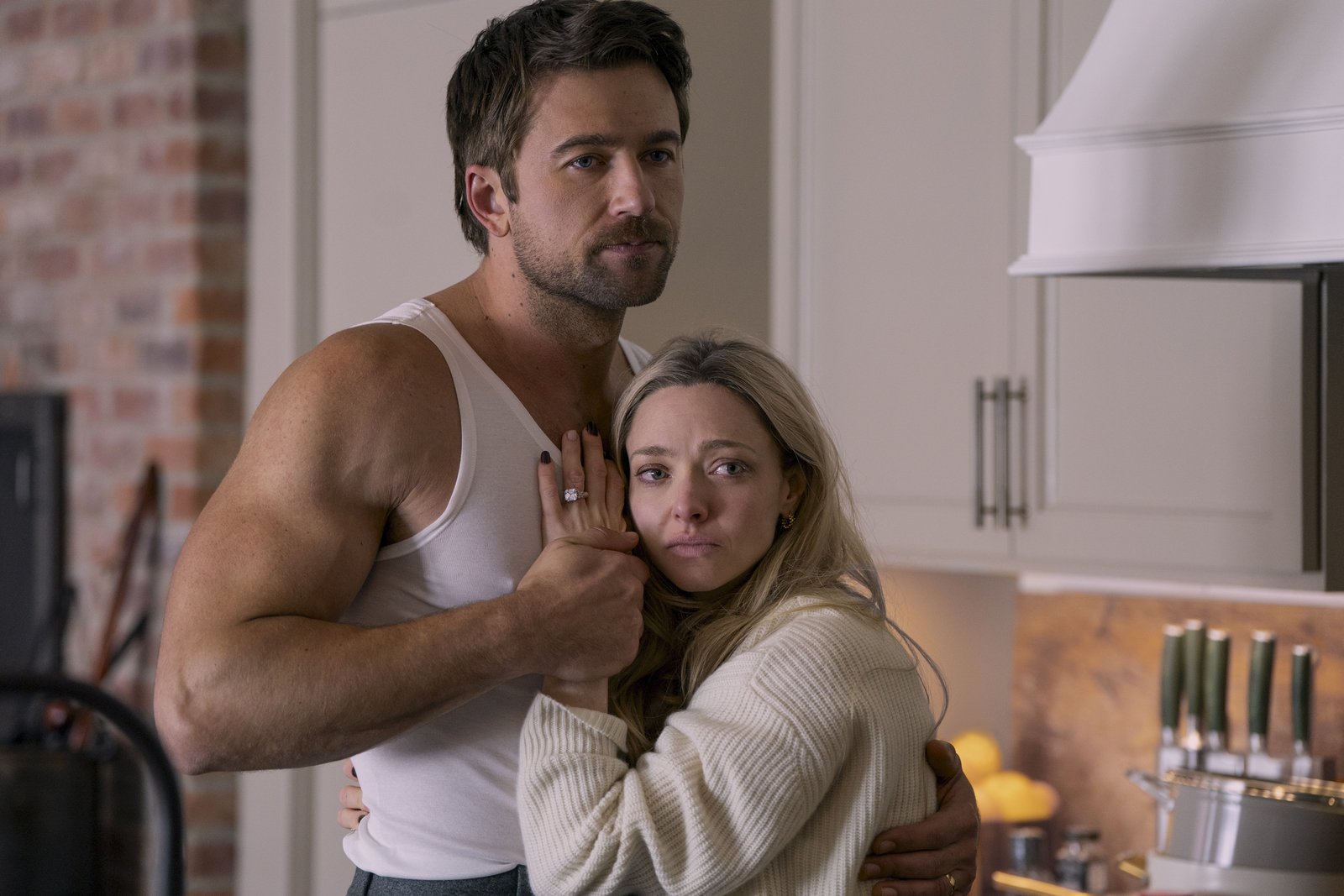
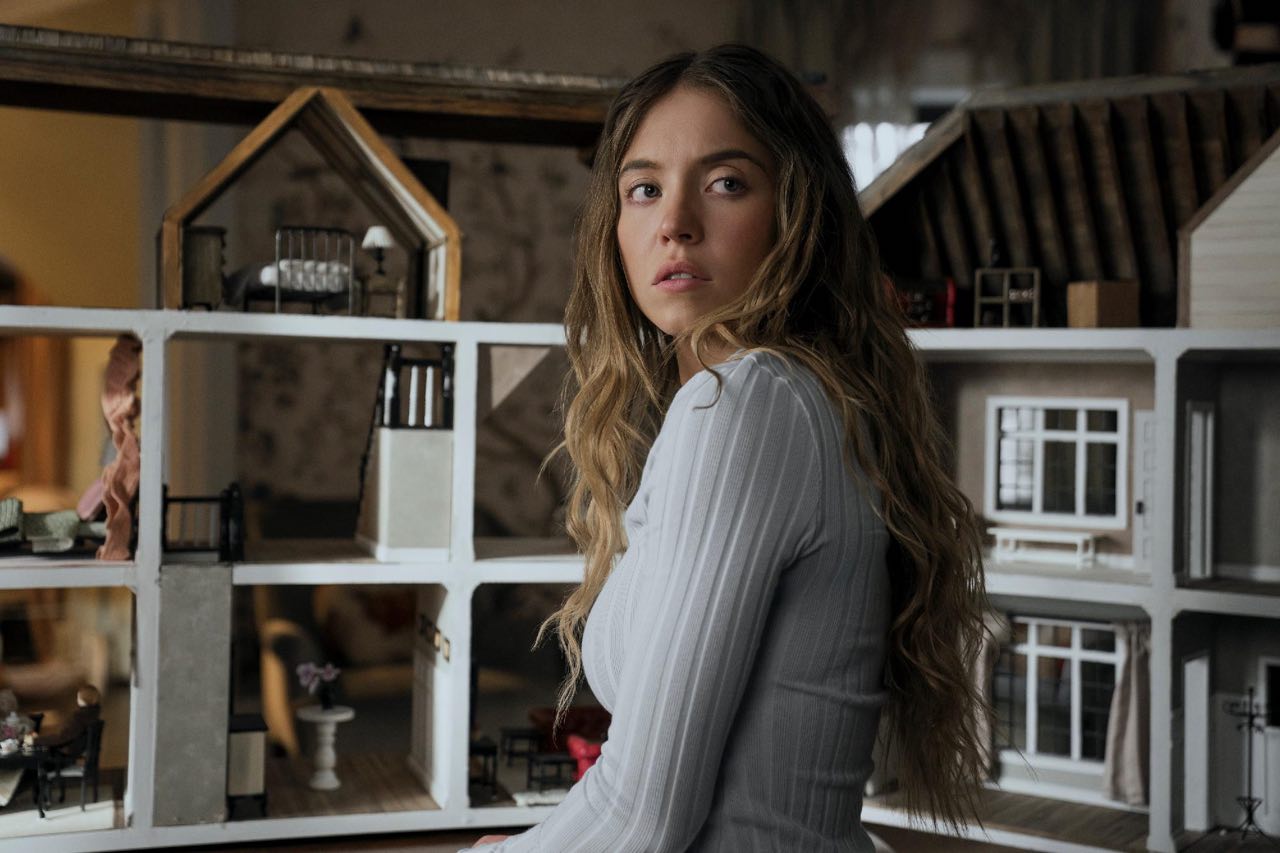
To the atmosphere of endless sexual tension, add a children’s dollhouse with changing compositions inside (the rooms are inhabited by figures similar to the real inhabitants of the mansion), the suspicious and arrogant daughter of the Winchesters (Indiana Elle), who forces Millie to wash the glass because “drinking juice is a privilege,” as well as rare guests - Nina’s hypocritical girlfriends, each of whom dreams of getting the ideal Andrew for herself. Thriller elements are mixed into the erotic show, and the situation in the Winchester house becomes more and more tense every day. What are the spouses hiding? And what secrets does Millie herself keep? Amanda Seyfried seems like a random visitor to this landscape. In the heroine’s hysterics, sudden mood swings and expressive theatricality, one can discern the school of old Hollywood; her Nina is a character from the world of Robert Aldrich and Alfred Hitchcock. Seyfried delivers a professional performance that borders on the grotesque, and fortunately the film’s question-answering second half allows The Will of Anna Lee star to show off her acting potential.
If you carefully follow the events and actions of the characters, then probably the main intrigue can be revealed even before the final explanation, but if the explicit scenes managed to distract you, then the denouement may well surprise you. It must be admitted that “The Housemaid”, despite all its peculiarities, really holds the tension quite well. Yes, the detective story is full of successful coincidences, the enumeration of which will have to be abandoned to preserve the intrigue, but surprise, joy and satisfaction from the ending are guaranteed - rest assured, you will understand who is evil here, and evil will be rewarded. It’s all the more offensive that for some reason Paul Feig is so unsure of the script and his abilities that he uses too cheap techniques to attract the audience.
What we saw makes us remember women’s novels, on the covers of which a half-naked, carefully retouched man invariably flaunts, behind whose torso dozens of pages of forbidden pleasure are hidden. Such books often live in summer handbags as an honest confession of the desire to have fun during the holidays. And don’t get me wrong, there is definitely nothing reprehensible in the desire itself. The problem with The Maid is completely different: the film stubbornly refuses to acknowledge its own attraction. The further the plot develops, the more persistently it strives to look not just like cleverly tailored genre entertainment, but also an important social statement.
Paul Figo lacks the courage and self-irony to turn flaws into advantages and step towards conscious camp. “The Maid” wants to have fun, but is afraid to seem frivolous, wants to talk about important things, but is afraid to seem too stuffy. The director cannot make a final choice and, until the very end, rushes between intonations, never deciding what the story should be. As a result, the film falls apart, leaving on one side a thriller with Seyfried and serious intonations, and on the other - erotica with Sweeney set to the pop music of Taylor Swift. However, this does not mean at all that you will not have fun while watching - it’s just that the effect will be one-time and short-lived.