
“Nouvelle Vague” by Richard Linklater appeared on Netflix on November 14. The director, known for his life-affirming films about dreams and achieving them, this time created not just a film, but a true ode to cinema that everyone who loves cinema must see.
The film turns to the French New Wave — the main revolution in cinema history, which caused a sensation in the 50s and 60s and still influences directors, film scholars, and screenwriters. Once you become acquainted with this movement, it’s impossible to watch or make cinema without looking back at it.
Linklater chooses an exquisitely precise period: Chabrol (Antoine Besson) has already made two films, Truffaut (Adrien Rouyan) triumphed in Cannes with “The 400 Blows,” and young Godard (Guillaume Marbeck) is just beginning work on his first feature film, suffering from creative crisis and the successes of his friends. But ahead of them all — in a year “Breathless” will conquer Berlin and the whole world, Jean-Paul Belmondo (Aubrey Dullen) will become a world star, and Jean Seberg (Zoe Deutsch) will break free from Hollywood. This debut will go down in history as one of the best after “Citizen Kane.” Twenty days to create a masterpiece — a precise period of time, and Linklater’s directorial intuition doesn’t fail.
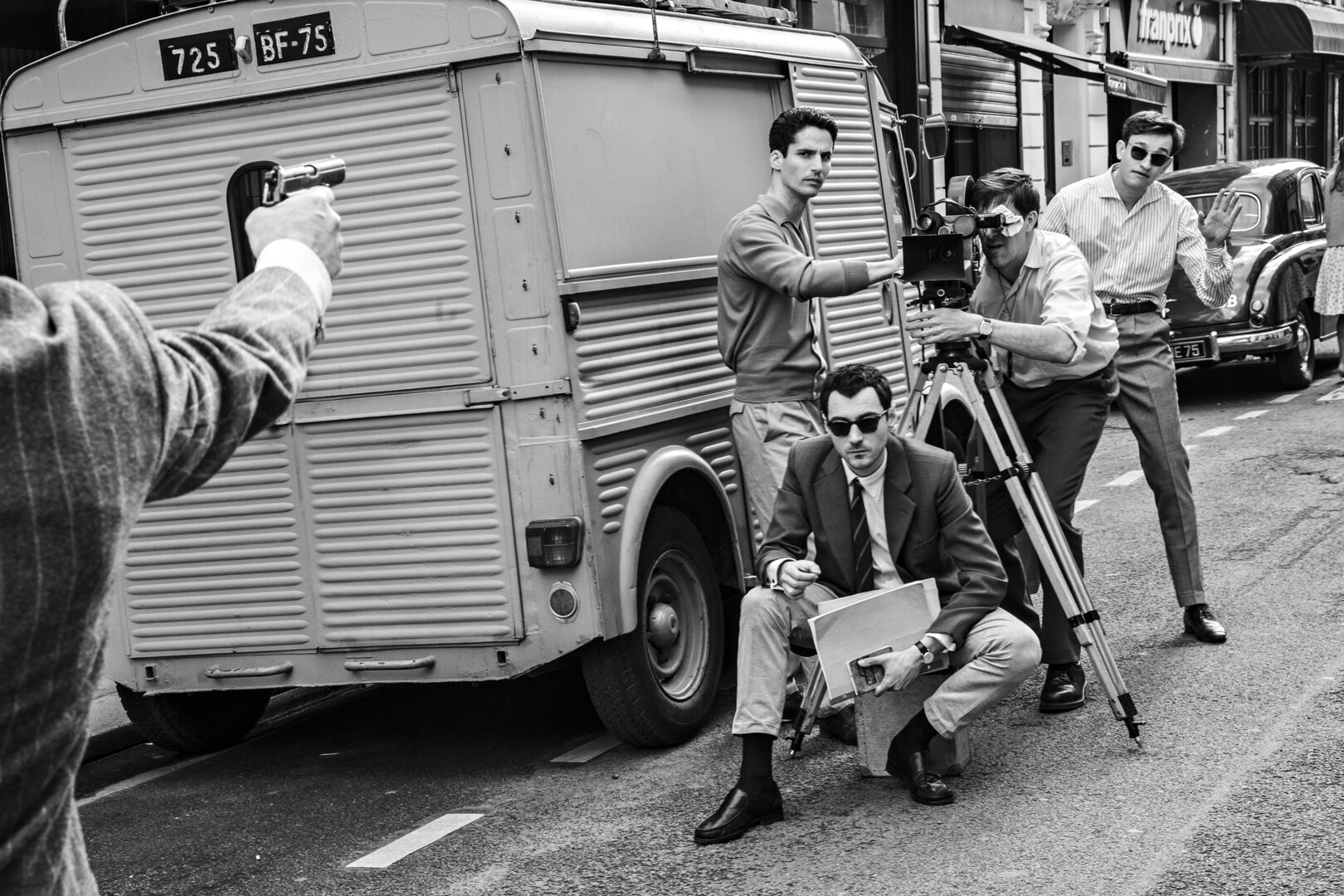
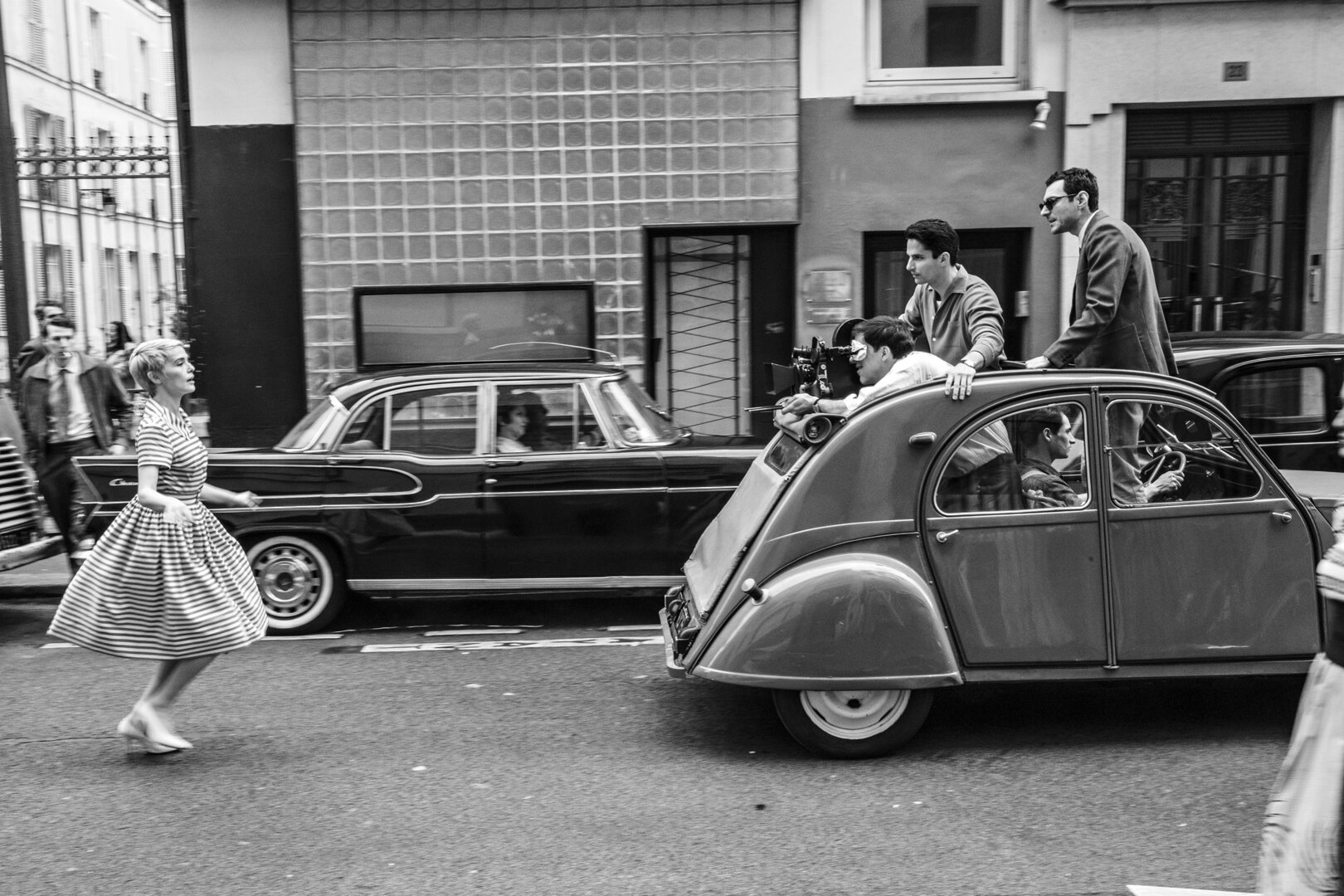
Based on the plot description, “Nouvelle Vague” could be called a biopic. Linklater selected actors so similar to the originals that the black-and-white picture seems documented in 1959 in Paris, not staged. As you dive into the narrative, you begin to believe in a time machine. The accuracy of locations, costumes, and scenes from Godard’s “Breathless” here is impeccable. The film is shot naturally and vividly — if Godard wanted a biographical film about himself, it would be exactly like this. All biopics should be modeled after “Nouvelle Vague”
However, this is not a biopic in the pure sense. First and foremost — this is cinema about cinema, about revolution in cinema, about a turning point and love for what these people did. Linklater shows a slice of an important era, drawing portraits of each participant: from Bresson (Aurélien Lornier) and Rossellini (Laurent Mothe) to Coutard (Mathieu Penchenat) and Rissien (Benjamin Clery). He captures the numerous names of the French New Wave with fleeting, almost photographic shots with a breaking of the fourth wall and explanatory titles. The director weaves complex acquaintances into one cozy gathering of people who dedicated themselves to cinema. Even an uninformed viewer won’t get lost — Linklater places accents carefully, gradually, focusing on Godard as the most famous face of the movement. The viewer will definitely grasp the basic principles of the New Wave.
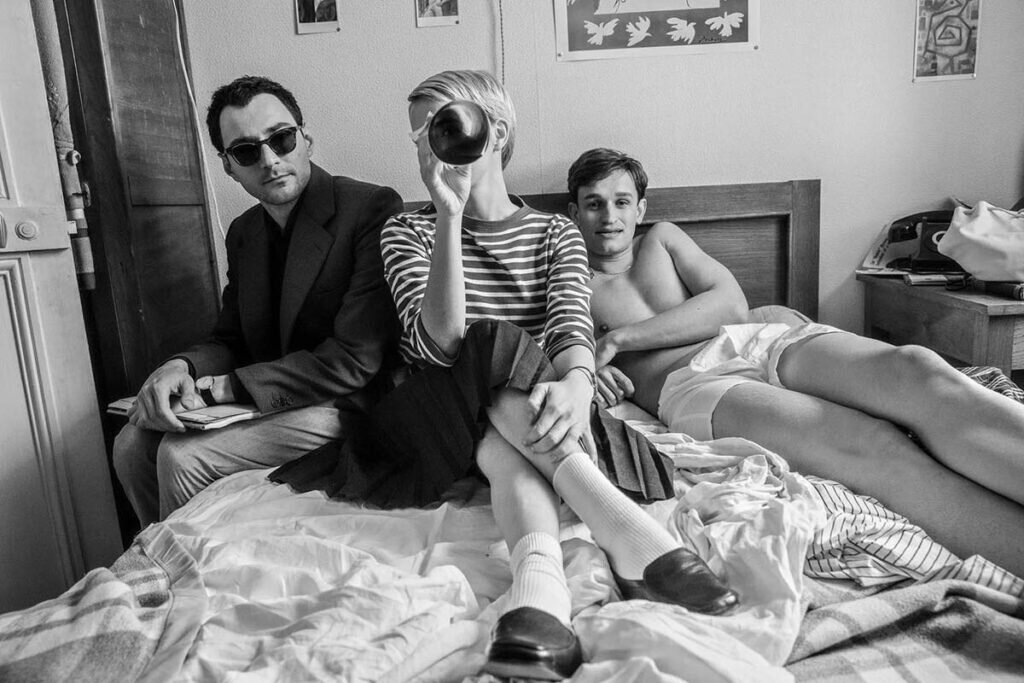
“Nouvelle Vague” stands alongside recent films about directors, where local humor dominates and there’s a parody of modern trends. One recalls Michel Gondry’s “The Book of Solutions” — an ironic self-portrait of an unrecognized genius, or Quentin Dupieux’s sarcastic “The Second Act” about the behind-the-scenes of filming. “Nouvelle Vague” has a lot of behind-the-scenes humor, life situations, and authenticity that will make you laugh even those who are far from film production. With all the historical background, there’s a lot of authorial vision of how it could have been — though it’s not a fact that it was exactly like that.
This is an honest, innocent, and sincere declaration of love to cinema. A message from a cinephile to cinephiles, a dedication to crazy and brave filmmakers from an equally crazy dreamer.