


Park Chan-wook once again explores the boundaries of human morality, this time through the lens of a corporate nightmare. His new film “No Other Choice” is simultaneously funny and terrifying, a story about how the economic system can drive an ordinary person to extremes. The director of “Oldboy” and “The Handmaiden” creates a work that balances between social drama, black comedy, and thriller without losing emotional depth.
Yu Man-su (Lee Byung-hun) is a paper industry manager with twenty-five years of experience. He lives an ordinary life: works, spends weekends with his family, grows plants in his own greenhouse. But when American investors buy the company and begin mass layoffs, he is fired. Man-su is confident he will quickly find a new job — he is an experienced specialist. However, months turn into a year, and he is forced to work in humiliating retail conditions, while his family gradually loses everything they had: his wife gives up hobbies, the dogs are taken by parents, the house is under threat of loss, and his son loses Netflix.
In despair, Man-su comes to a horrifying decision: if he kills one of the company managers, a vacancy will open up. But after analyzing the situation, he realizes he needs to eliminate not only the manager but also two other candidates who have a better chance of getting the job. Thus begins his descent into corporate hell, where each step brings him closer to a moral abyss, but it’s too late to retreat.
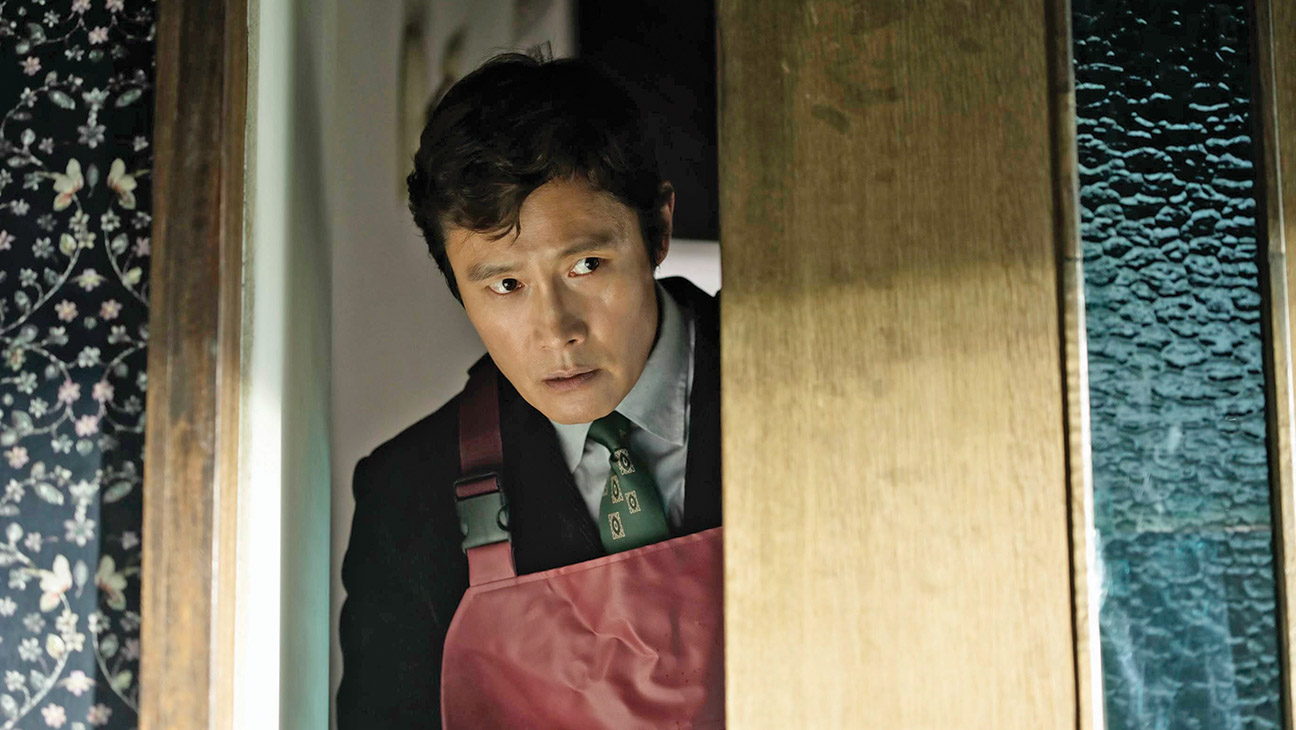
Park Chan-wook masterfully shows how the system breaks a person. Man-su is not a villain — he simply found himself in a situation where, as the film’s original title suggests, there is no other choice. The director explores the theme of fate, creating a web of intertwined destinies where life and death become part of a single construct. The main character becomes an unwitting executor of the predetermined, armed with a pistol from the Vietnam War era.
The film also raises important questions about the social instability of Korea’s middle class. In 2025, the share of production workers in South Korea dropped to a record 15.5%, and the industry lost tens of thousands of jobs. While office workers fear neural networks, thousands of experienced specialists find themselves on the street. Chan-wook shows how economic growth turns into a crisis for ordinary people with families, homes, and dreams.
The director uses his signature genre mix: social drama sharply transitions into satirical everyday sketches, followed by an outburst of violence that provokes hysterical laughter. Meeting another victim, Man-su sees his own reflection — another person thrown to the side of life. This creates absurd situations in his family and gently builds the character’s emotional development.
Narrative fluidity is one of the film’s main features. Park Chan-wook’s confident hand is felt in everything: from plot presentation and organic musical accompaniment to exceptional editing that creates a measured rhythm. At the same time, what happens on screen keeps you in tension — empathy for such a human hero captivates from the first minutes.
“No Other Choice” is devoid of illusions that honesty will necessarily win. This is a film that with a bitter smirk captures the anxiety of post-industrial society, where people become the most vulnerable part of the system. Park Chan-wook reminds us that any economic growth has a downside — a crisis that hits not abstract corporations but living people. The director offers no solution and makes no moral conclusions, simply telling a story — funny, scary, recognizable, and at some level hopeless.