
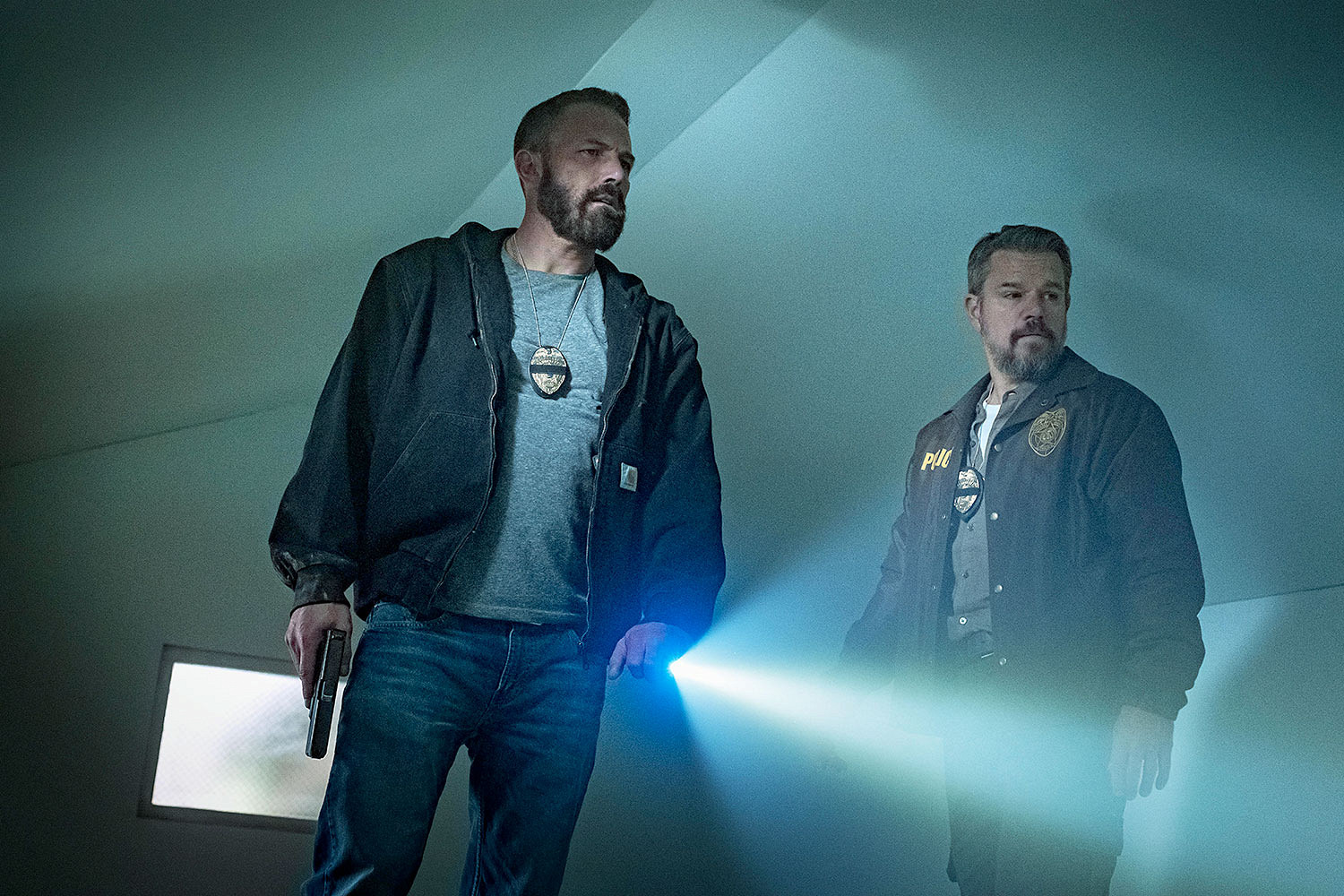
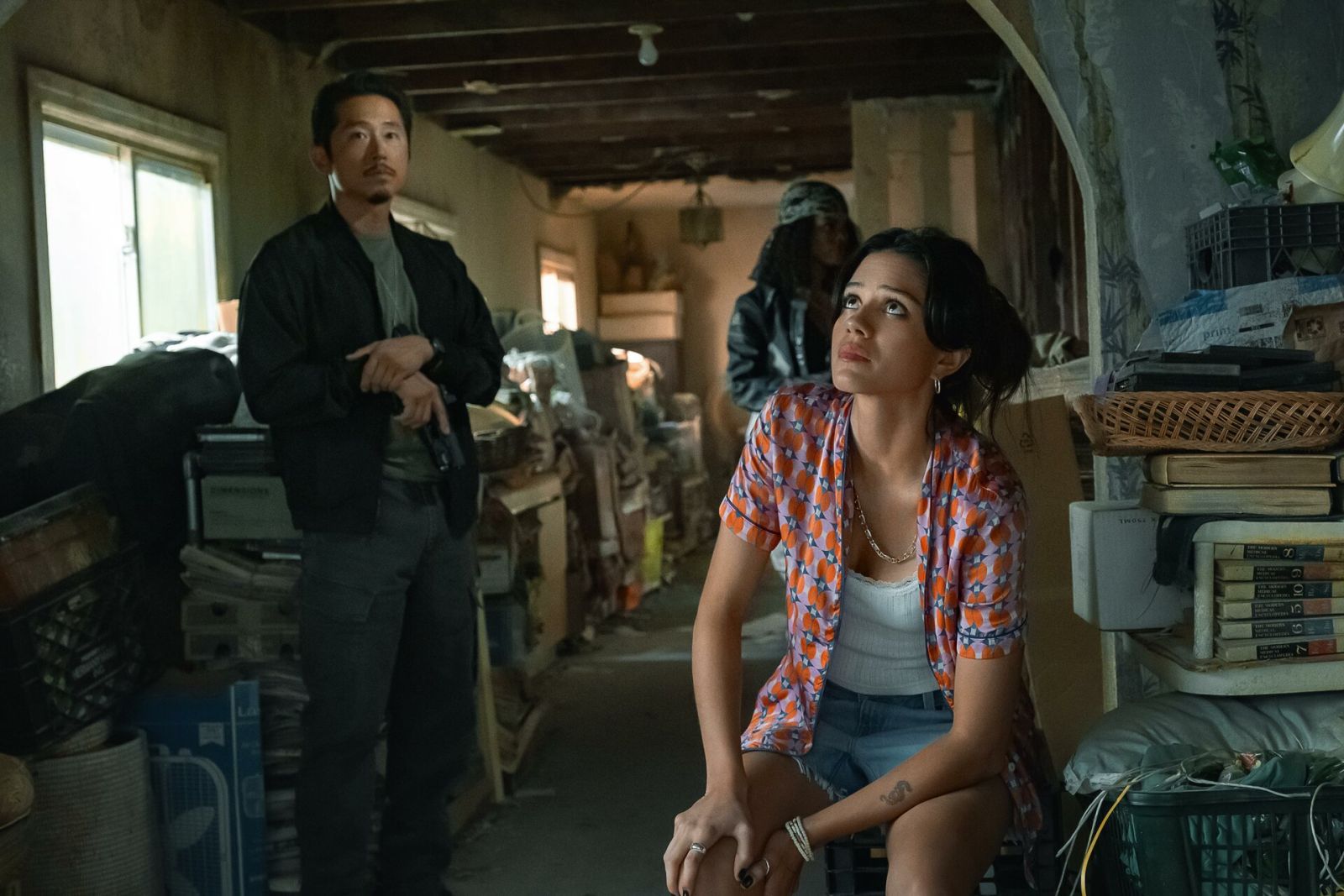
In Miami, the head of the local narcotics task force, Jackie Velez (Lina Esco), is killed while on a mission. Her subordinates, including Lieutenant DuMars (Damon) and Sergeant Byrne (Affleck), try to recover from the loss, hold their own against inquisitive FBI agents, and find those responsible. After a tip from informed sources, DuMars learns of a suburban stash house where a modest sum of several hundred thousand dollars is illegally kept. When the team arrives, they discover more than $20 million hidden in the walls. Desi (Sasha Calle), the young woman who meets the team, is visibly uneasy and begs them to take the money and leave at once, before things get worse.
Go along with it or report to headquarters? Is there a “rat” among the operatives who is also responsible for Jackie’s death? Why is it so suspiciously quiet and deserted around the stash house? Soon the mission turns into a fight for survival.
Carnahan has had an uneven decade in the industry. The director behind loud ensemble Hollywood pictures (after “Smokin’ Aces”, “The A-Team” made noise too) retreated to television, fell back on self-repetition and forgettable plots (“Copshop”, “Not Without Hope”), and occasionally bounced back (“Boss Level”).
“RIP” could serve as a reminder of his old drive and point his creative energy in the right direction. Discerning viewers will easily spot the main references: from Michael Mann’s work (“Heat” with Pacino and De Niro, “Miami Vice”) to John Carpenter’s “Assault on Precinct 13”, Sidney Lumet’s “Serpico”, and dozens of similar stories. At times the drama brings to mind Agatha Christie and Rian Johnson’s “Knives Out” trilogy.
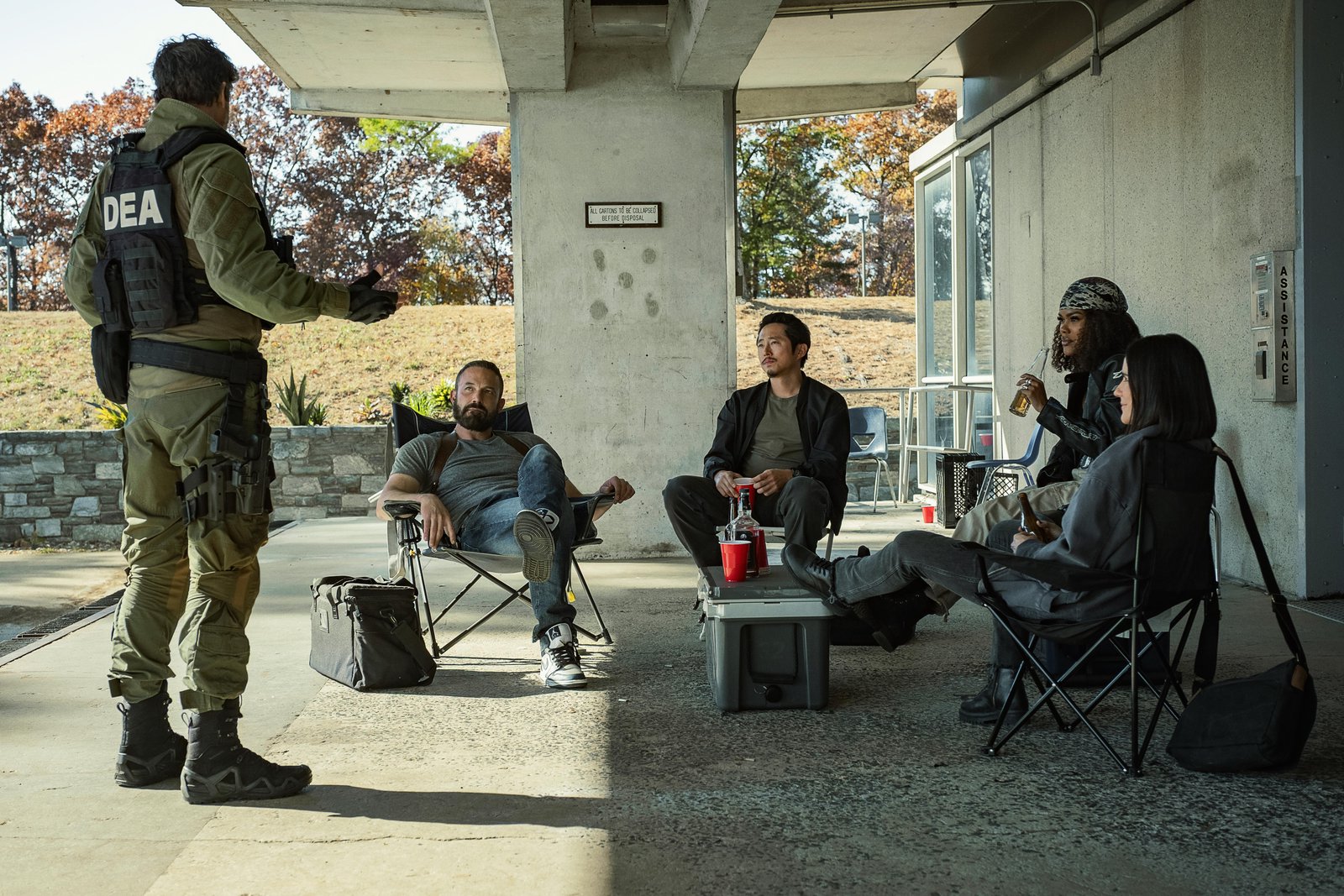
Carnahan works with familiar genre setups: corrupt cops, Colombian cartels, an ambush both literal and metaphysical, fire from unseen enemies. Trust evaporates fast, which visibly frustrates and psychologically pressures the cops who have each other’s backs. After Velez’s death, DuMars takes charge of the team, which doesn’t sit well with Byrne, who had a romance with the late commander.
The rest of the group (Steven Yeun, Taylour Paige, Catalina Sandino Moreno) are at a loss: they showed up for a routine bust with a friendly beagle sniffer dog and hardly expected such a grim outcome. DuMars’s personal tragedy makes things worse—his son recently died of cancer. Burying himself in work doesn’t help, because everything that happens keeps reminding him of death.
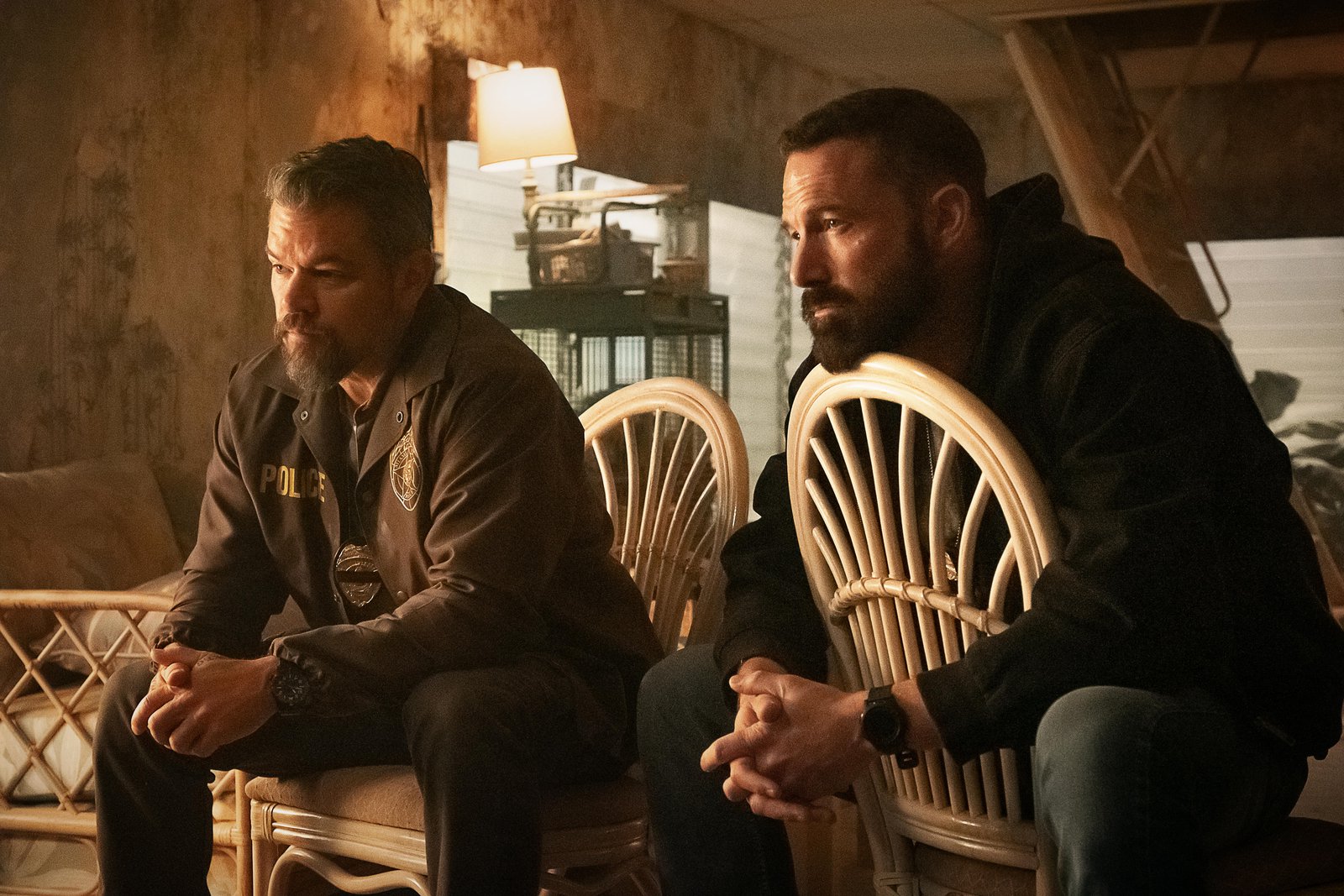
“RIP” is made with anger, roughness, and confidence. It’s time to die; there’s no time to worry about artistic merit. Yet this kind of aesthetic rawness somehow invigorates and grips. Compared to other action B-movies from Netflix, this one is clearly made with an eye to scale and theatrical release. Tension builds right up to the finale. Of course, the recognizable, neatly coordinated, one-after-another twists are inevitable (the villain is always close by, and not hard to figure out). Thanks to their charisma, likability, and years of hard work, Damon and Affleck turn a run-of-the-mill B picture into a sharp statement about solidarity, however brutal.
All enemies will be defeated, and the reconciled will sit on the beach and watch the setting sun. The world may suffer, cinema may endure another death, but something remains eternal. For instance, two Boston guys who made the dream real. “Are we good guys?”—the slogan and the tattoo on DuMars’s arm. “We were, we are, and we will be,” the film replies.