
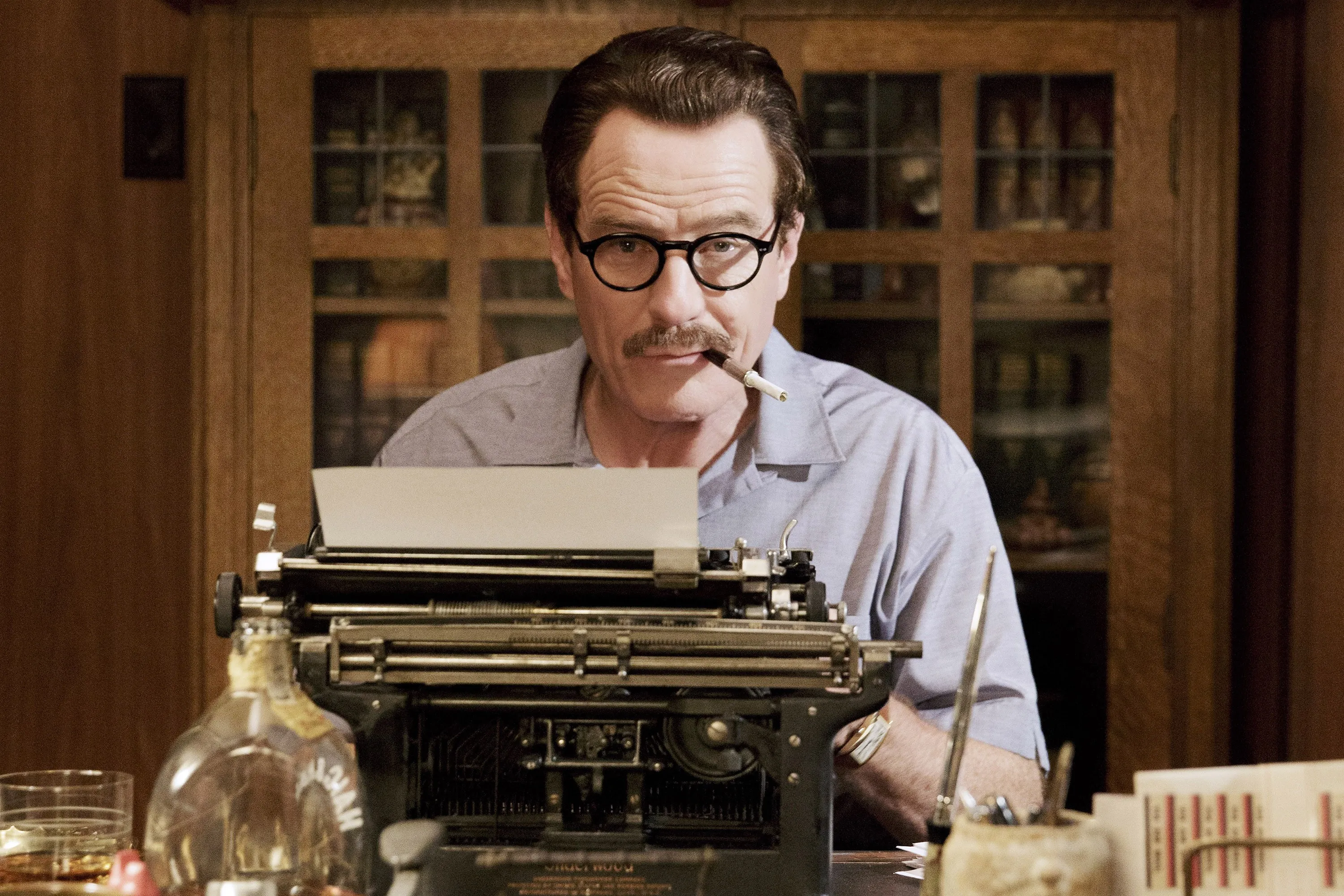
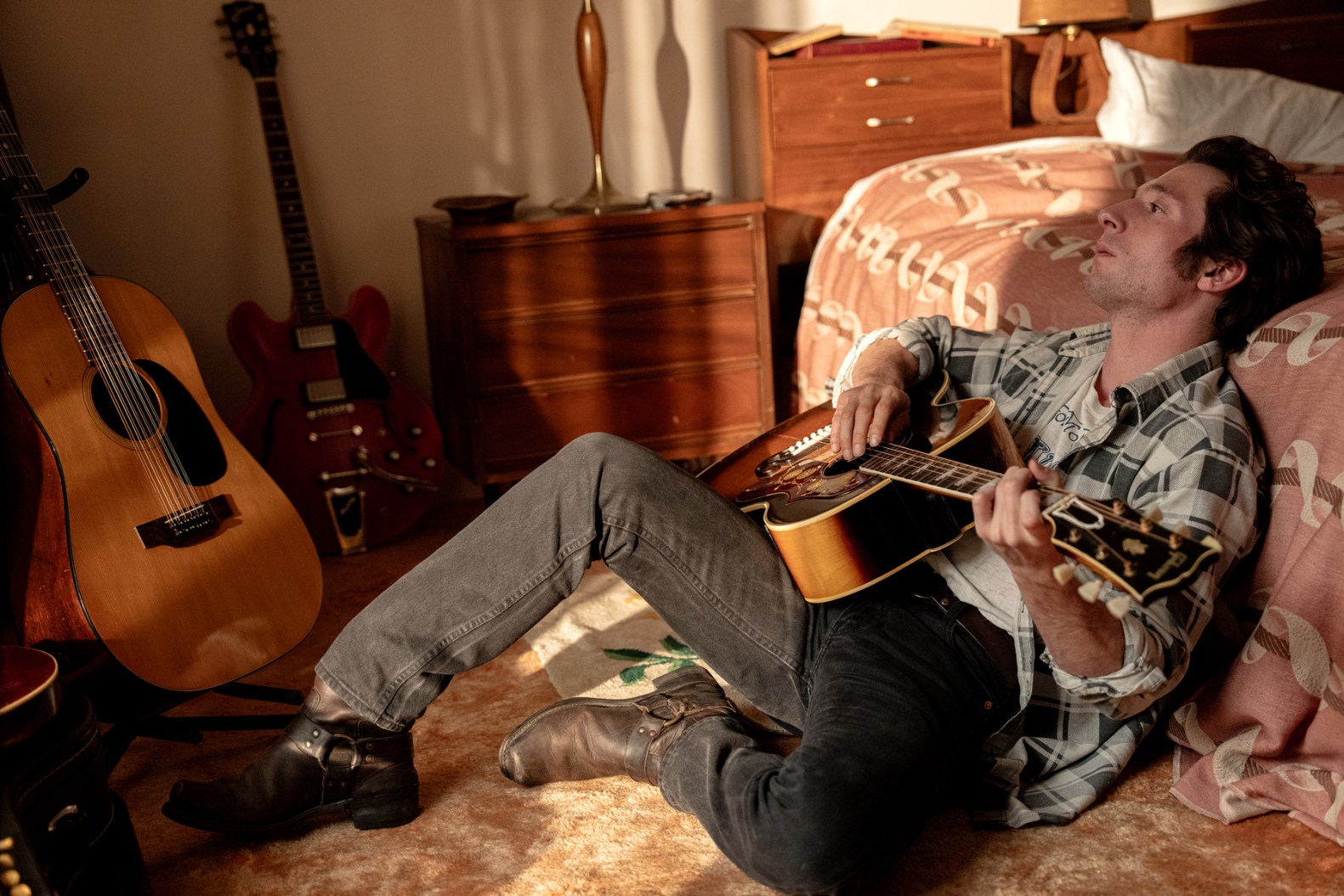
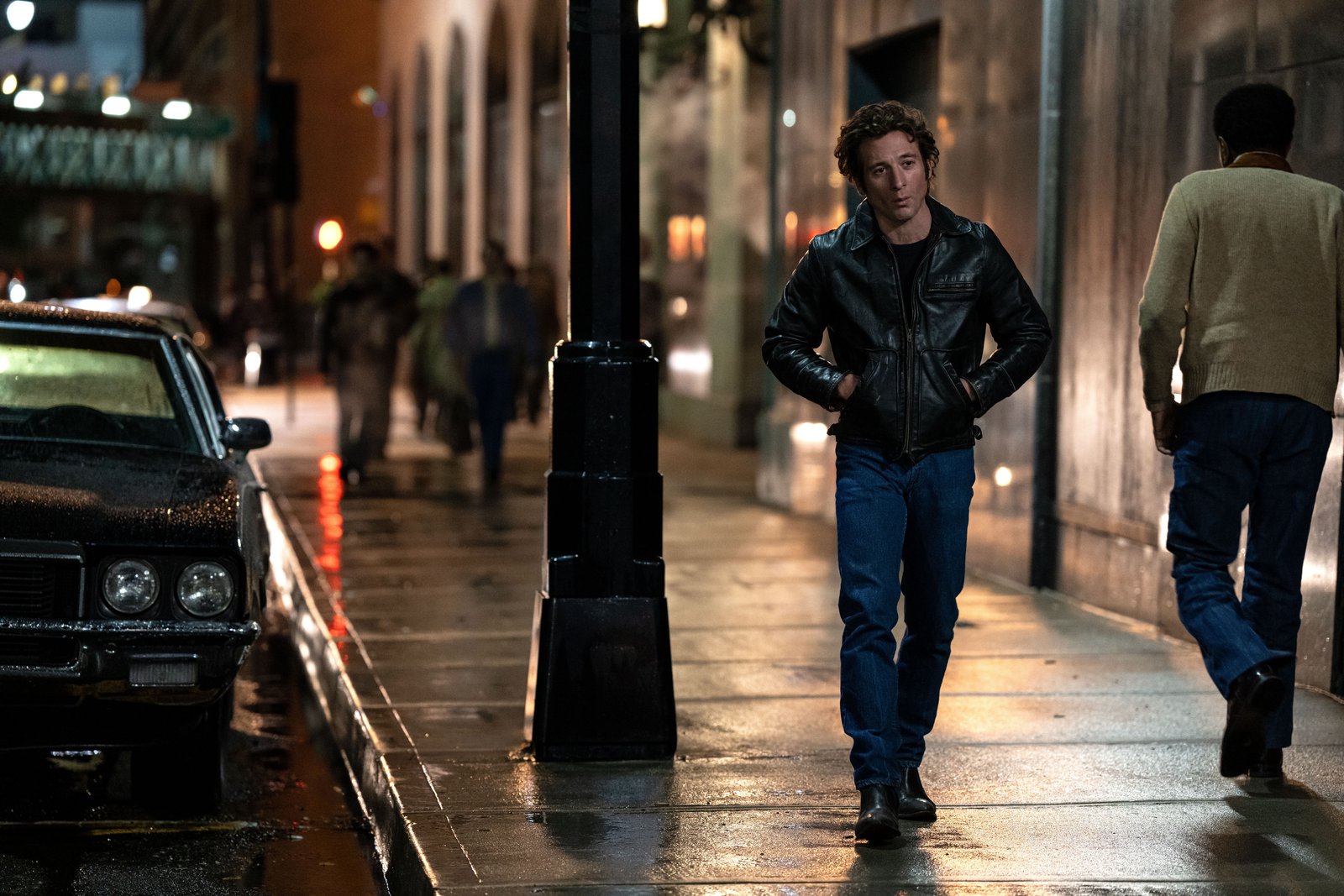
- American television is thriving: MTV launches, and Jane Fonda is about to become the “mother of aerobics.” But for Al Teller (David Krumholtz) from Columbia Records and producer John Landau (Jeremy Strong), troubling times are ahead. Their client, thirty-two-year-old Bruce Springsteen (Jeremy Allen White), at the peak of fame after the success of The River, decides to go against the current and record the album Nebraska, which seems doomed to failure.
Scott Cooper’s new film “Springsteen: Deliver Me from Nowhere” tells the story of two key moments in the musician’s life: a sharp change in style and a period of dark thoughts reflected in the 1982 album. This is not a story about the path to fame – Springsteen has already reached the top. This is a dialogue with the abyss through pain and music.
Against the Current
Springsteen buries himself in books, studies the stories of Flannery O’Connor, the lives of workers, criminals, and outcasts. He rents a house in the countryside, spends nights alone, scribbling gloomy lines on paper. Acoustic guitar, harmonica, dark lyrics – and a release without press support, tour, singles. The cover has no face of the musician, only a gloomy landscape reminiscent of Terrence Malick’s “Badlands,” which Bruce watches with particular attention and which inspires him to record the title track.
They expect a banger like Born in the U.S.A. from the musician, but he chooses a different path. This is what male depression looks like, captured on film.
Acting Work
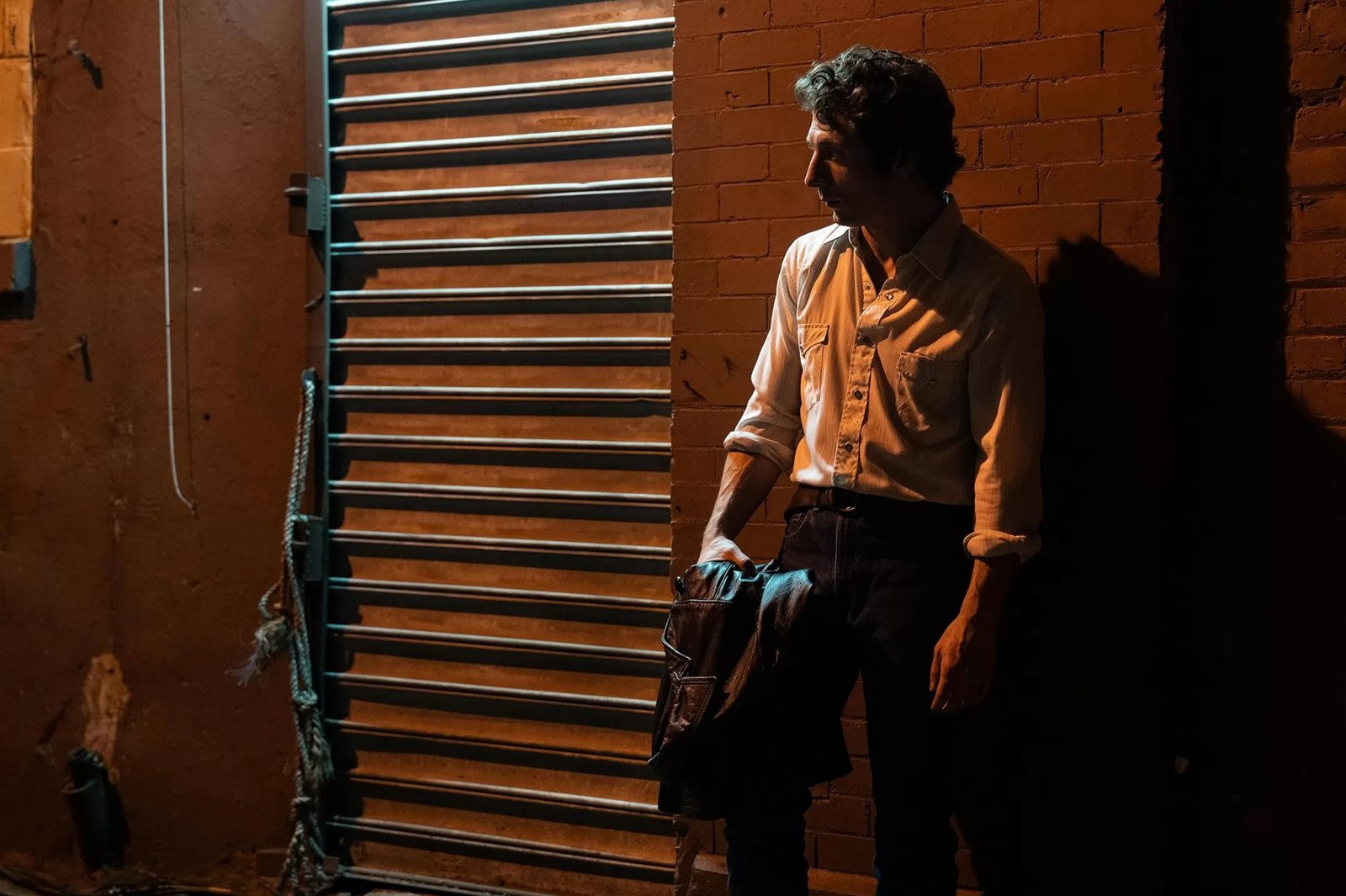
Jeremy Allen White, of course, doesn’t look much like Springsteen externally, but everything is decided by the hoarse voice, shirt, worn jeans, and the actor’s age – the star of “The Bear” was only slightly older at the time of filming than the musician was when recording Nebraska. Young actors in the roles of folk musicians – a new trend in Hollywood biopics after films about stadium rock singers like “Bohemian Rhapsody” and “Rocketman.”
Familiar Paths
Director Scott Cooper is no stranger to working in the musical genre. In 2009, he turned Jeff Bridges into an aging country singer in “Crazy Heart.” His other works about the dark pages of American life – “Out of the Furnace,” “Black Mass,” “Antlers” – seem to foreshadow the ballad darkness of the Nebraska album.
In the Springsteen biopic, the director doesn’t reinvent the wheel and follows familiar paths. Here’s a thoughtful singer challenging the music business and being proven right. The main conflict, of course, is internal – a depressive abyss sucks in Bruce and interferes with his personal life, and his relationship with waitress Fay (Odessa Young) makes him run into the unknown.
Childhood with an alcoholic father (Stephen Graham) left its mark, constantly returning him to past events – traumatic black-and-white flashbacks that only the lazy wouldn’t mock today. The spaces won’t surprise either: diners, bars, rock clubs, beds, and empty kitchens where the hero spends time alone.
Dark Energy
Despite the worn-out structure, “Springsteen” holds up quite confidently: it’s not even about the music, not about the skillful stylization of the 80s, but about the feeling of dark energy, that world sorrow that feeds Allen White’s hero, as if reminding us: modern rock stars experience the same thing as the dark romantics of the 19th century.
Undoubtedly, this makes Cooper’s biopic more of an acting achievement than a script or directorial one, but in films about musicians, it’s rarely otherwise.
Finale
This is not a film about the path to fame, but about a dialogue with the abyss – through pain and music. Notably, the biopic doesn’t conclude with Bruce’s resounding victory when the Nebraska album succeeded, shamed skeptics, and revealed another side of his creative soul. The film doesn’t end with a loud performance, but with a visit to a therapist – the author of the hit Born in the U.S.A. needed it much more than the crowd’s frenzy.
“Springsteen” is also about what makes up inspiration for a modern poet. The new light is barren wastelands where outcasts, the lost, robbers, and murderers roam, just like in Terrence Malick’s film. And don’t tell me there’s a more American story than this.