
It is with Superman’s bloody face lying in the snow that the film begins. James Gunn, who broadcast the development process of the film on social networks, made it clear that he did not intend to once again procrastinate on the origin story of the hero. Clark Kent in “Superman” appears to the audience not only as a full-fledged hero, who has been protecting Metropolis from external and internal threats for three years, but also not the last journalist of the Daily Planet newspaper. And in his free time from work and exploits, Kal-El also meets with his colleague Lois Lane (Rachel Brosnahan). Gunn is convinced that over the almost ninety-year history of the character (the first comic book about Superman was published in 1938), such details of Clark’s biography as his escape from Krypton, his childhood on the Kent farm (Pruitt Taylor Vince and Neva Howell) and superhero formation have already become part of the world cultural code and there is no need to once again record these episodes in cinema. 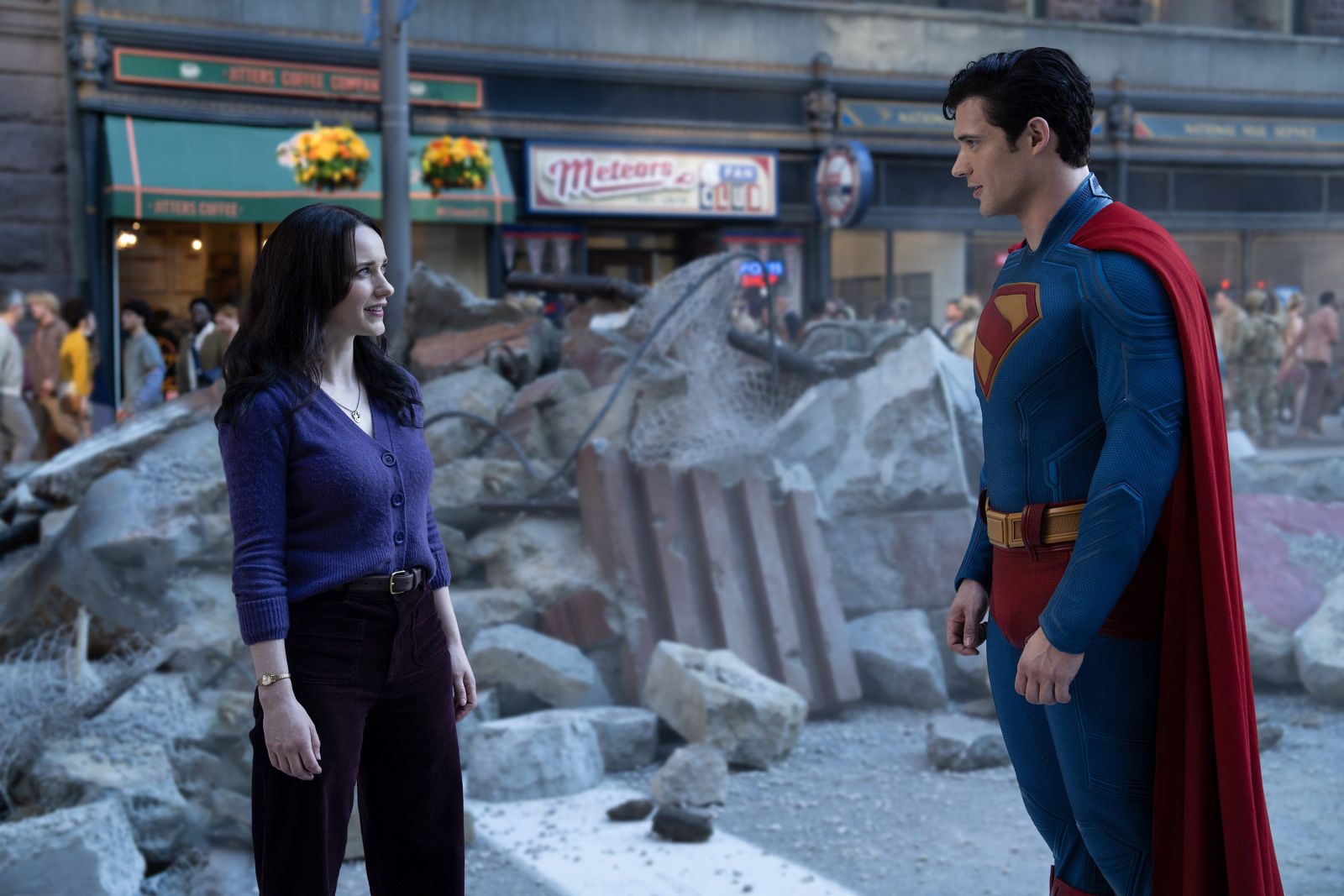
Although Gunn is right, the idea of throwing viewers straight into the middle of a story is a double-edged sword. Of course, spending precious time on a new reading of world-old truths makes no sense, but the director, carried away by the creation of his own universe, artificially increases the entry threshold for neophytes. In the first traditionally expositional half hour, so many events happen on the screen and so many new characters appear that unprepared viewers can only bat their eyes helplessly. Even ardent fans of Superman comics are not always able to follow all the plot threads that Gunn draws from the main character to the secondary ones. For example, an important role in the story is played by the Justice Gang, consisting of Green Lantern (Nathan Fillion), Mister Terrific (Edi Gathegi) and Hawkgirl (Isabela Merced), but who are these people and why are they called Superman’s friends (they even know the secret his personality!), the film doesn’t bother to explain. 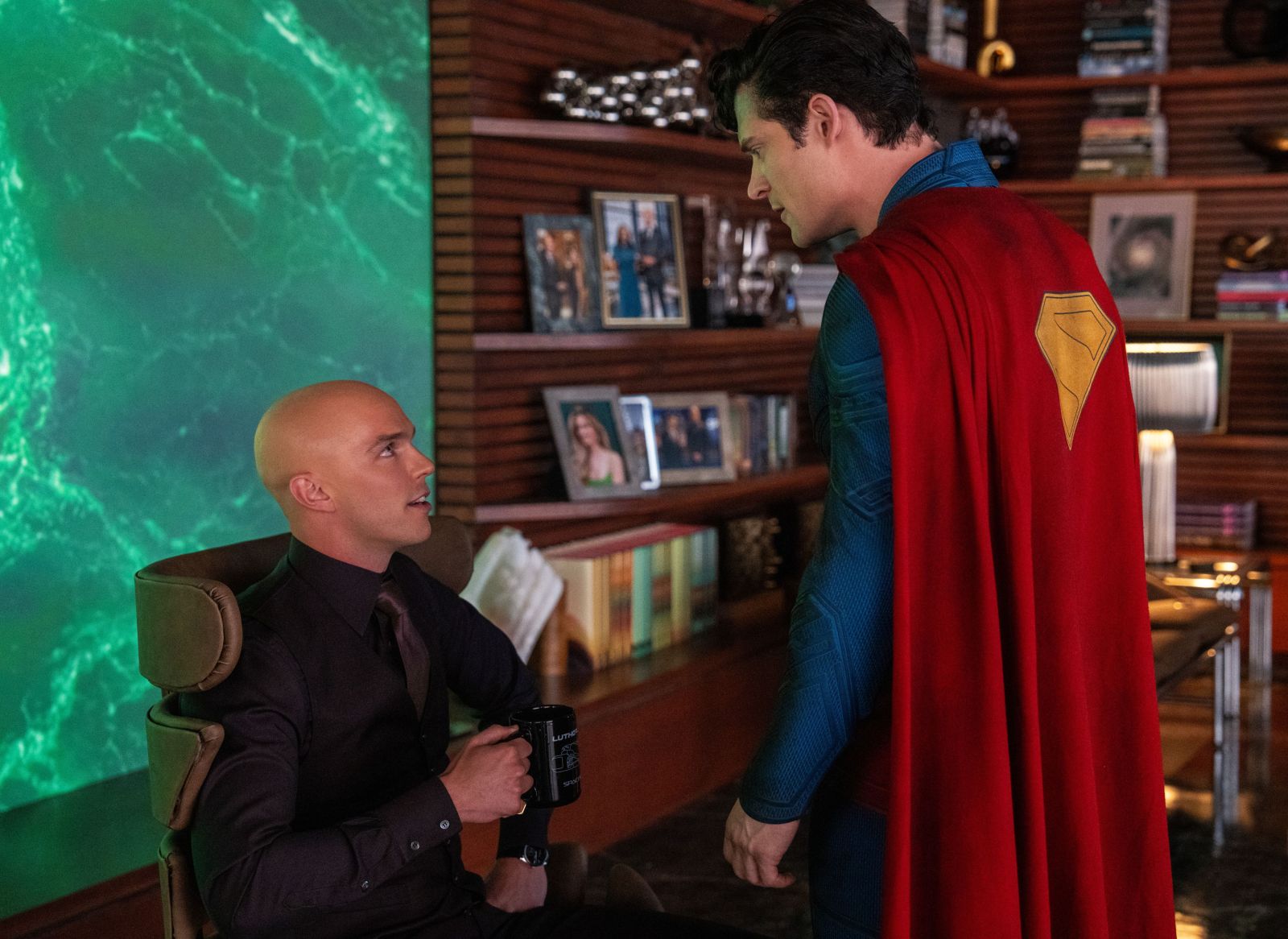
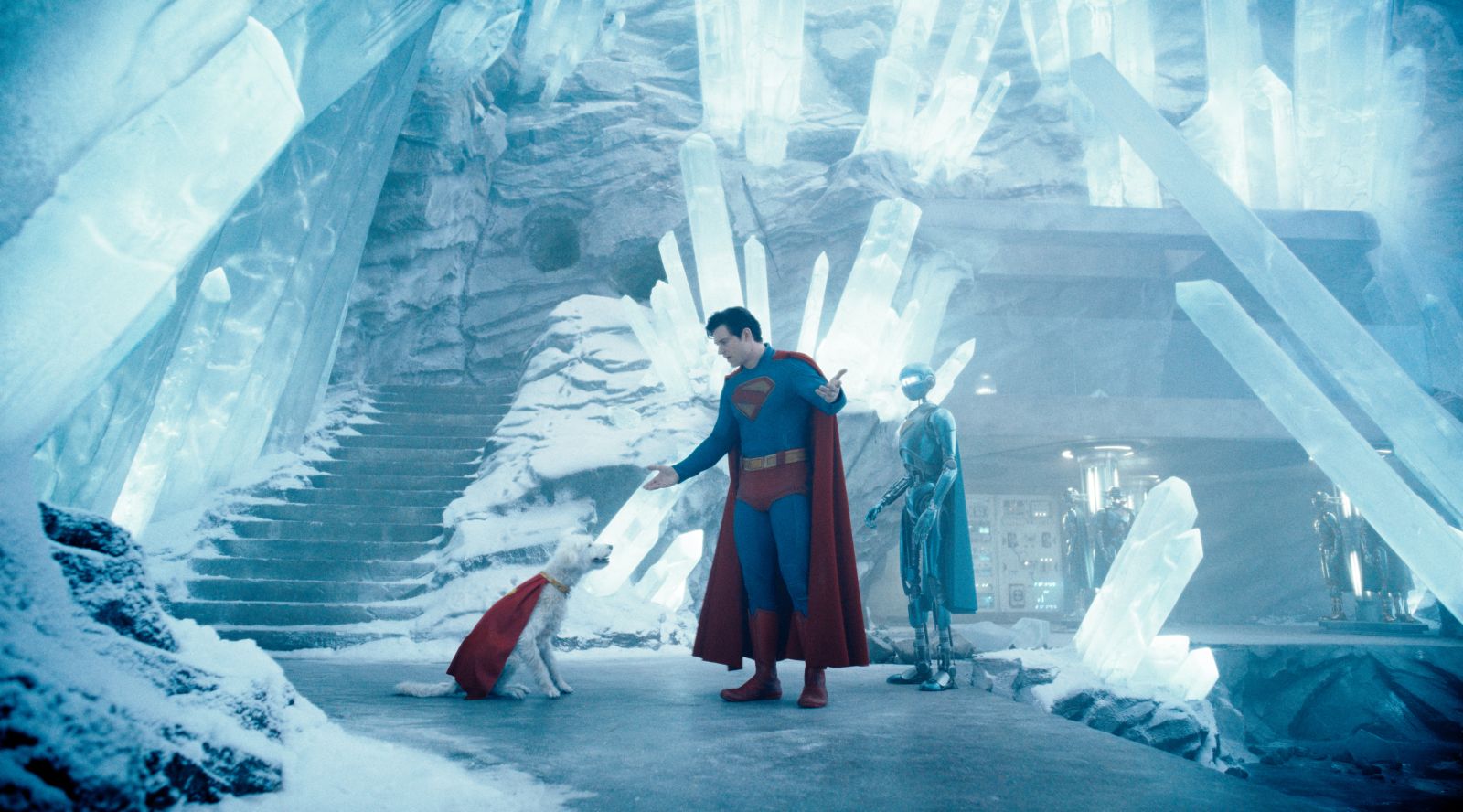
In an attempt to escape the fundamental seriousness of the franchise built by Zack Snyder, James Gunn gets stuck in self-repetition and does exactly the same thing that he did in Guardians of the Galaxy and Suicide Squad. “Superman” tries to convey one of the most important meanings in the global myth about the Man of Steel: there is as much human in Kal-El as there is superhuman. It turns out that the film is mostly clumsy, but at times incredibly touching. For every stilted line explaining the characters’ motives, there is a moment of understandable humanism cast in gold. So, while going in search of the beautiful dog Krypto, captured by Lex Luthor, Superman says: “Technically, I’m just looking out for him, and he’s not even the nicest dog. But now he’s alone and scared.” Krypto, created literally in the image of Gunn’s beloved dog named Ozu, is the heart of the new “Superman”, a mischievous, sometimes dangerous to others, but incredibly charming dog in a red cape. For the plot, Krypto is like a litmus test: by interacting with him, it instantly becomes clear who is the villain and who has a big heart. Luthor is going to experiment on the dog and then destroy it, which in Gunn’s understanding is the final stage of the moral decline of the character, played so reliably by Nicholas Hoult that it becomes scary. His Luthor is a maniac hiding under the guise of a charming tech tycoon, the owner of a pocket universe that houses a prison for his enemies (mostly ex-girlfriends and journalists), a laboratory, and even his own troll factory, where thousands of real monkeys write angry “tweets” addressed to Superman. 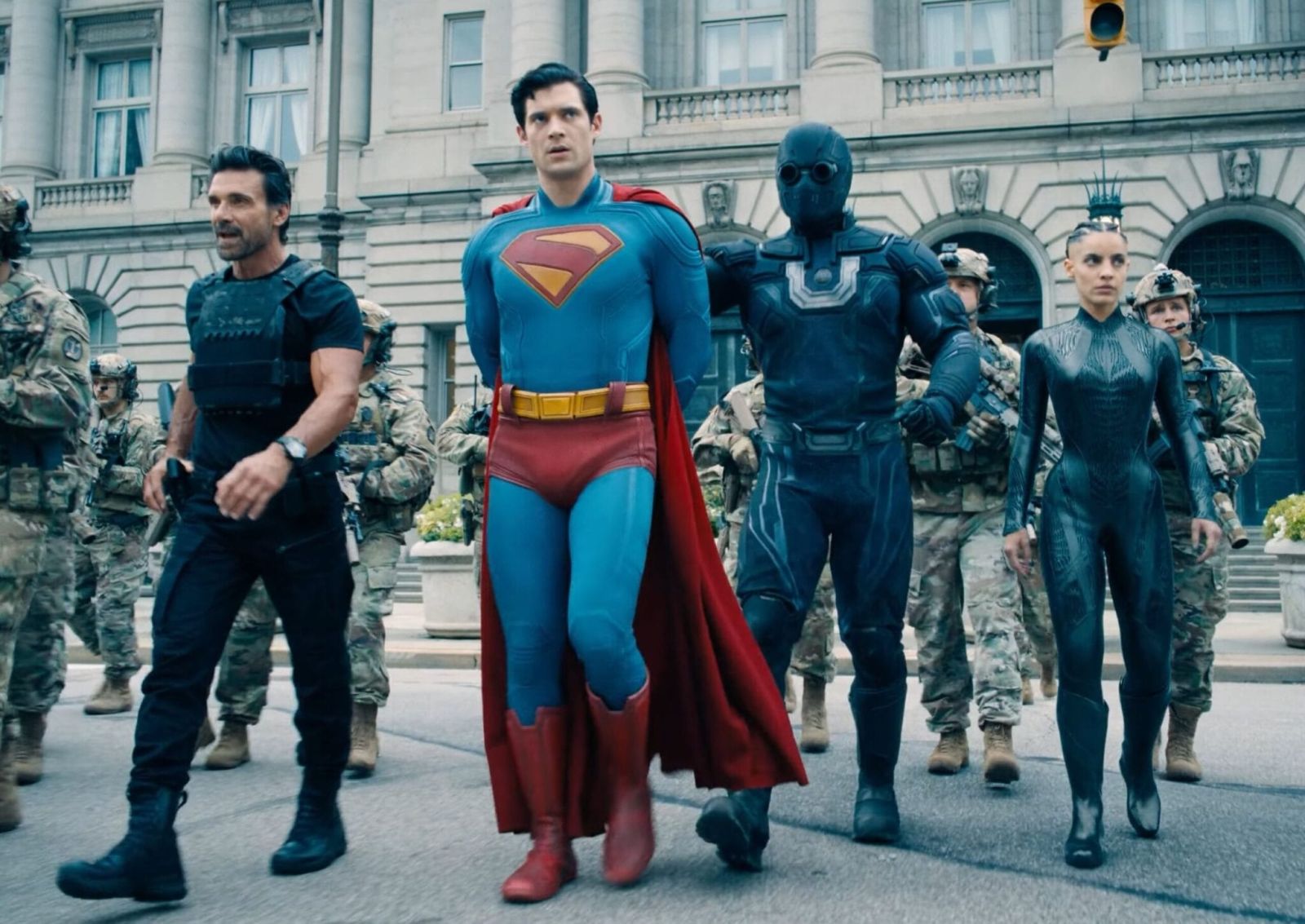
Despite all the comedy, Luthor turned out to be a completely worthy villain - a clever manipulator who relies on his remarkable intelligence and technology, and, of course, quite a bit racist, because what angers him the most is that Superman is an alien. With such small details, here and there Gunn seems to give a meta-commentary on reality, lumping together geopolitics (Boravia, thirsty for the blood of the Jarhanpurians, is an official ally of the United States), and his own sad experience of failed cancellation, and (where without this) the work of his predecessors, who molded Superman into the image of a boring truth-telling god. Corenswet’s Clark Kent emerged as a young man who, just yesterday, was a teenager and perceives great power as an incredible responsibility for all living beings, be it a squirrel or a giant alien monster. While saving people and furry animals from monsters and man-made disasters, Superman does not forget about the personal. True, the relationship with Lois Lane boils down to a not very successful interview and awkward declarations of love against the backdrop of a battle with alien evil spirits; Gunn either saved the rest for the next films or simply forgot to write it down. Thus, Rachel Brosnahan’s potential remained at the level of close-ups of the actress’s expressive eyes - although her Lois moves the plot in the right direction, carrying out impressive journalistic work and obtaining dirt on Lex Luthor, she is depicted completely flatly. Even her passion for punk rock (which the heroine mentions in passing) does not save the situation.
“Superman” by James Gunn is an uneven movie in many ways, traditionally “Gunn”, with budgetary manipulation of the audience’s emotions, a bunch of characters of varying degrees of foolishness, themes of family (which appears over time, and is not given by blood), love and friendship at the forefront. The director mixes all this in a high-octane, deliberately comic-style visual style, with an emphasis on details and bright effects, and spices it up with not always delicately rendered, but sometimes stylish action. “Superman” will definitely anger fans of Zack Snyder’s dark trilogy, because the new intonation, deliberately chosen by Gunn, takes the universe in the opposite direction. And only time will tell how long the boss of DC Studios will be able to adhere to such a radical vector of development.