
A fresh adaptation of Stephen King’s classic novel about a deadly TV show has arrived in theaters. Glen Powell stars in “The Running Man,” directed by British filmmaker Edgar Wright, known for “Shaun of the Dead,” “Scott Pilgrim vs. The World,” and “Baby Driver.”
In the near future, a bankrupt America is ruled by a media corporation. Their highest-rated reality show is “The Running Man.” The rules are simple: contestants must hide from five hunters for a whole month, while ordinary citizens can turn them in for money. Losers are executed live on air. The winner gets a billion dollars, but so far no one has lasted longer than 29 days.
Ben Richards (Glen Powell) lost his job due to his stubbornness and union activity. His young daughter is sick, but the family can’t afford treatment, even though Ben’s wife works double shifts as a waitress. Desperate, Ben decides to participate in the TV show — like many residents of poor neighborhoods. Producer Killian (Josh Brolin) immediately notices the anger in him that could boost ratings.
This fall, cinema turns to old Stephen King novels that he wrote under the name Richard Bachman over 40 years ago. “The Long Walk” and “The Running Man” tell similar stories about a cruel future America where people entertain themselves with deadly shows. Curiously, the events of “The Running Man” unfold precisely in 2025 — the writer proved prophetic in some ways.
Many remember “The Running Man” from the 1987 film with Arnold Schwarzenegger — a flashy action movie where Arnie cracked jokes over every killed enemy, and among the hunters were an opera singer and an American football star. But that film only vaguely resembled the book. Wright’s new version is much closer to the original, though the director still rewrote the ending.
Glen Powell doesn’t play like Schwarzenegger, but rather like a young Bruce Willis. Only Willis’s heroes were usually pushed to extremes gradually, while Ben Richards is ready to explode from morning. In the first scene, he brings his child to a meeting with his boss to restrain his anger. This is a classic technique from John McClane films — an ordinary man just wanted to help his family. Powell is physically and emotionally ready to become a new action hero, but is this role right for him? The actor is clearly more comfortable in roles where he can smile more.

The main villain Killian is a typical cynical producer who makes one dirty offer after another to the hero. The character turned out quite simple. Josh Brolin plays him easily and without tension, though the TV host from the old film was much more sinister. Colman Domingo plays the slippery show host, and Lee Pace is the most brutal hunter who constantly wears a mask and dark glasses. When he finally removes the mask in the finale, viewers might be disappointed — it’s just Lee Pace underneath.
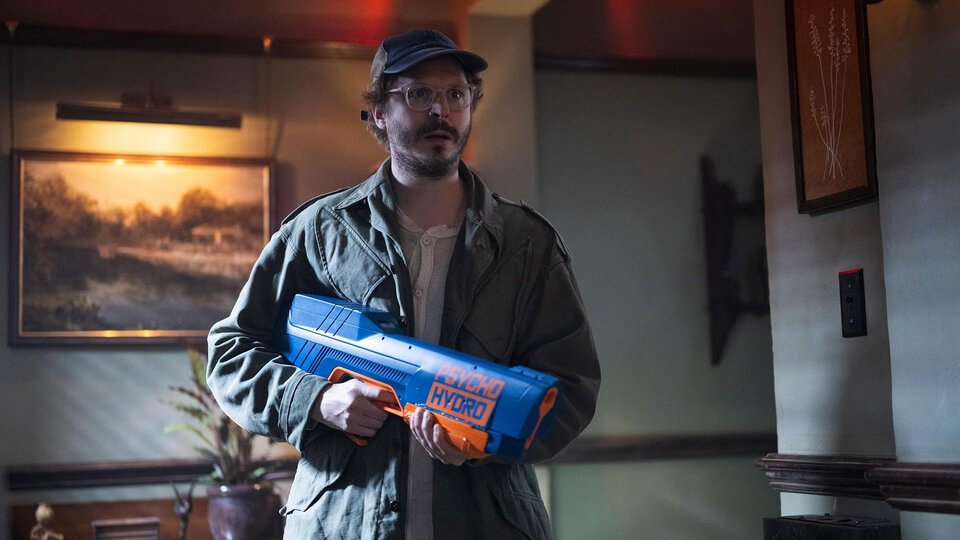
The hero has no permanent allies — the film is built as a chain of Richards’ meetings with different people. They either help or hinder him, then disappear from the plot. William H. Macy appears in one scene as Ben’s old friend. Emilia Jones plays a random companion closer to the finale. Daniel Ezra plays an underground podcaster. And Wright gave the brightest role to Michael Cera — he plays a hereditary rebel who publishes anarchist magazines and knows about explosives.
Wright filmed the dark future world with his characteristic visual flair, and the action scenes (especially those featuring Cera) turned out spectacular. A society where the only way to get rich is to risk your life on television looks both depressing and stylish.
But there are two problems. First, we’ve seen all this many times in other films. Police barriers in poor neighborhoods, flying drones, brutal TV shows — even the simplicity of “The Long Walk” seems fresher than this set of dystopian clichés.
Second, Wright got so carried away with dark predictions that he forgot to show any hope. His arsenal contains only banal sentimental moments (the film has two sick girls). In the old Schwarzenegger action film, everything was simple: there are fascists, there are rebels, there are deceived people who can wake up. Wright chooses a cynical approach — people are hopeless and crave spectacle, no matter what kind. For them, there’s no difference between the slogans “kill Richards” and “Richards lives.” The future is bleak: no art, only television.