The main character is a father who writes comics. The characters’ names are never mentioned in the film. After his wife dies suddenly, he’s left alone with two school-age sons. It’s immediately clear that the man can’t cook or communicate with children — his wife used to handle all of that.
The father sinks deeper into grief, stops doing household chores. He only draws in his room. But one day a terrifying huge Raven appears in the house. The creature looks dangerous and seems to finally break the man’s psyche. Though maybe it’s not that simple.
Benedict Cumberbatch Returns to Big Drama in “The Thing with Feathers”
Usually reviews start with the plot, then move on to acting or visuals. But let’s be honest: if “The Thing with Feathers” interests anyone in Russia, it’s mainly because of Benedict Cumberbatch. Audiences fell in love with the actor after “Sherlock,” and then he was constantly on screen. He appeared in Marvel films, “Star Trek,” and a bunch of biopics.
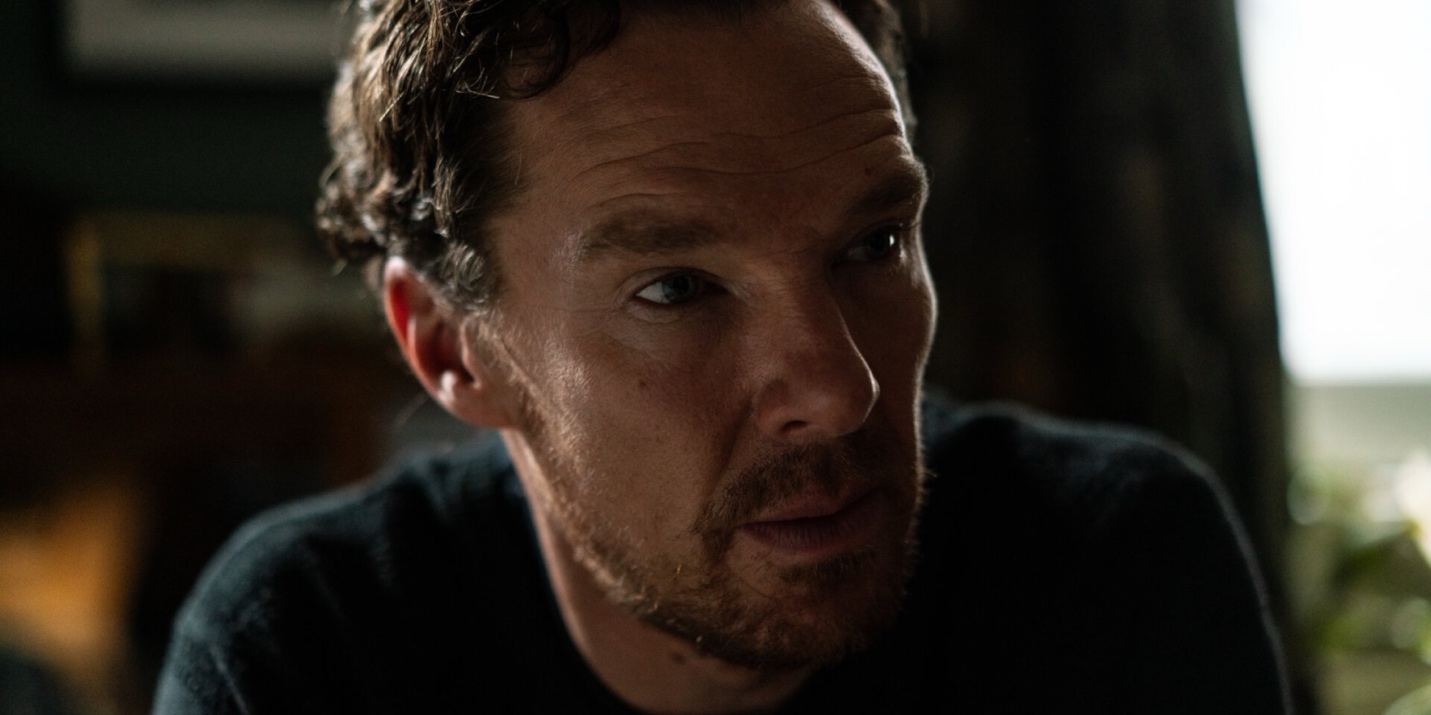
But in recent years Cumberbatch rarely appears in standout roles. He was a supporting character in “The Flood” and “The Book of Clarence,” one of many stars in Wes Anderson films. The only truly major role he played after “The Power of the Dog” was in the series “Eric” — and he won everyone over again.
2025 marks Cumberbatch’s return to big cinema. “The Roses” with him didn’t make it to Russian theaters (but it’s already available digitally — worth watching), while “The Thing with Feathers” can be seen in cinemas. Here he seems to continue themes from “Eric” and the less known “The Child in Time” — about a creative person going mad from family problems.
Simon Pegg, who worked with him on “Star Trek,” once joked that the Cumberbatch everyone loves doesn’t exist in real life. Off set the actor behaves awkwardly and uncertainly, but in front of the camera he becomes a stately hero or villain. But in “The Thing with Feathers” Cumberbatch somehow draws attention even when doing almost nothing.
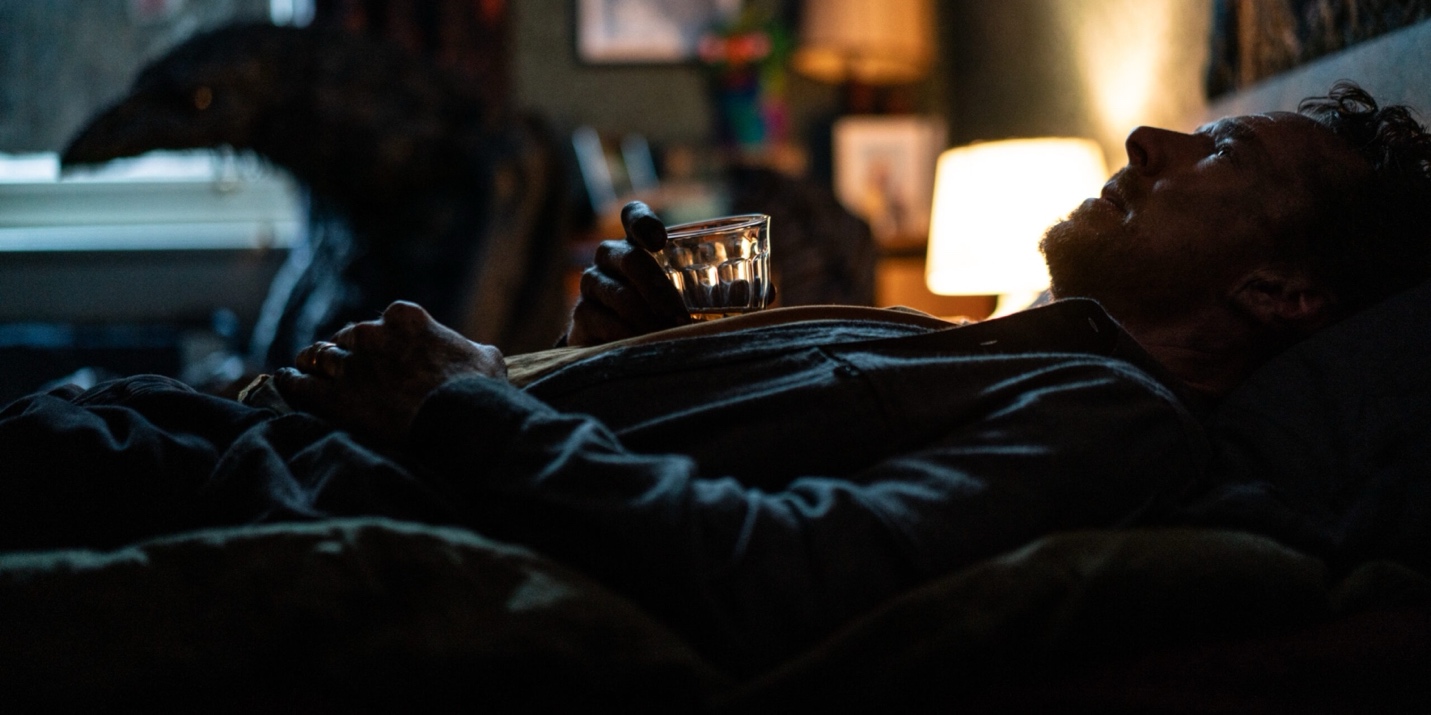
The character can lie around for a long time, wash dishes, or just stare into space. But this inaction has more meaning and tragedy than long, pompous speeches. How unpleasant and pitiful he is when he breaks down. And how terrifying his hands look when he’s lost in his work.
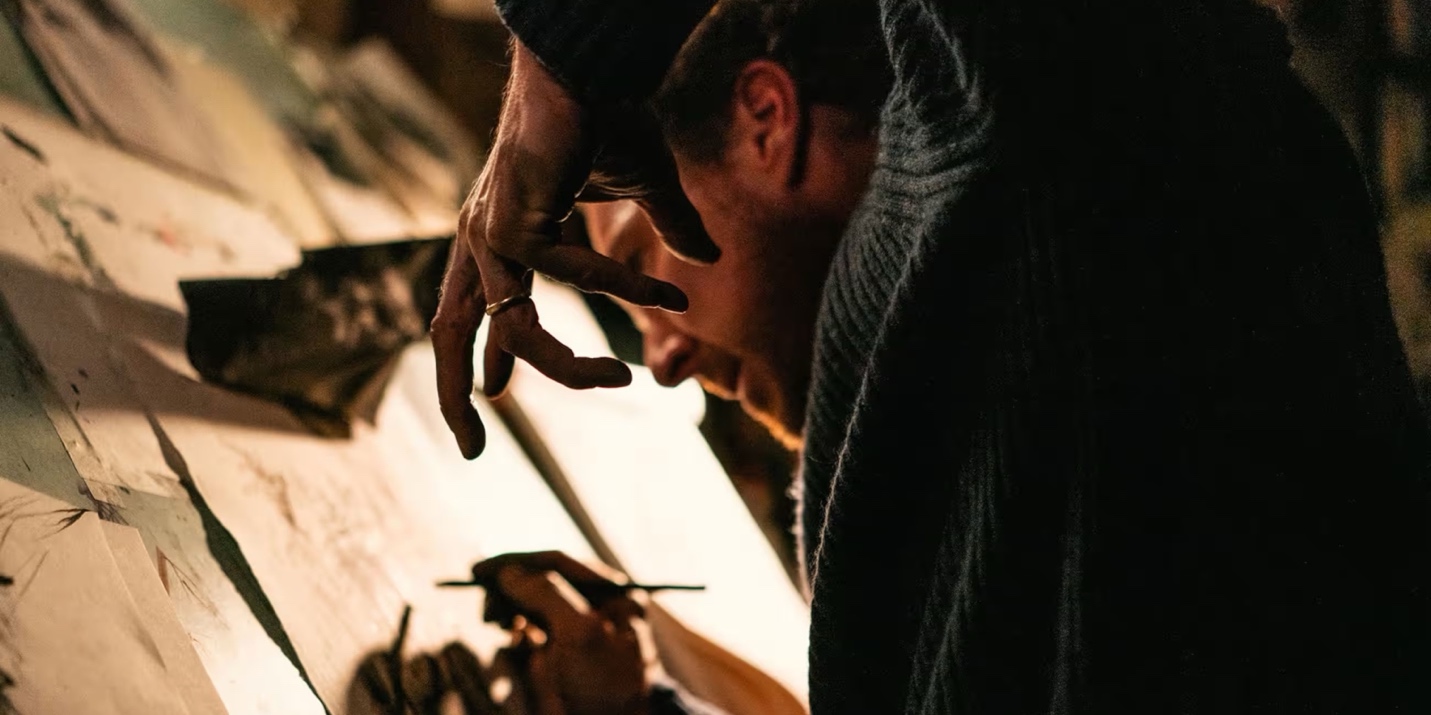
In this film one actor matters more than all the sets and events. Thanks to Cumberbatch, the character’s grief literally turns him inside out, revealing his worst sides. Some actions make you want to hate him, others make you want to hug him. Staying indifferent is almost impossible.
”The Thing with Feathers” Is Almost Theatrical, But Honest
For Russia and other countries “The Thing with Feathers” came as a surprise. But for Britain it’s an expected event. Max Porter’s book “Grief Is the Thing with Feathers” came out in 2015, became a bestseller, and was translated into two dozen languages. It’s all because of the unusual structure. The novel shows three perspectives on one event: first the father’s feelings, then the children’s, then the mystical Raven that embodies their grief.
Porter mixed his own experiences (his father died when Max was six) with Ted Hughes’s philosophical poetry. The title comes from an Emily Dickinson poem, only hers was “Hope is the thing with feathers.” Unlike the original, the novel’s title sounds even darker.
After the successful book came a theater production where the Father was played by Cillian Murphy (interesting to compare him with Cumberbatch). The story simply had to reach the screen. But that’s exactly where the book’s foundation started to change.
“The Thing with Feathers” was directed by Dylan Southern, known to fans of Blur and LCD Soundsystem for his excellent documentaries. In narrative film the director kept the main thing — the desire to tell the story to the viewer. The three-part structure got a bit blurred: in all parts the Father remains the main character. But the viewer still learns about the children’s feelings and the Raven’s strange role.
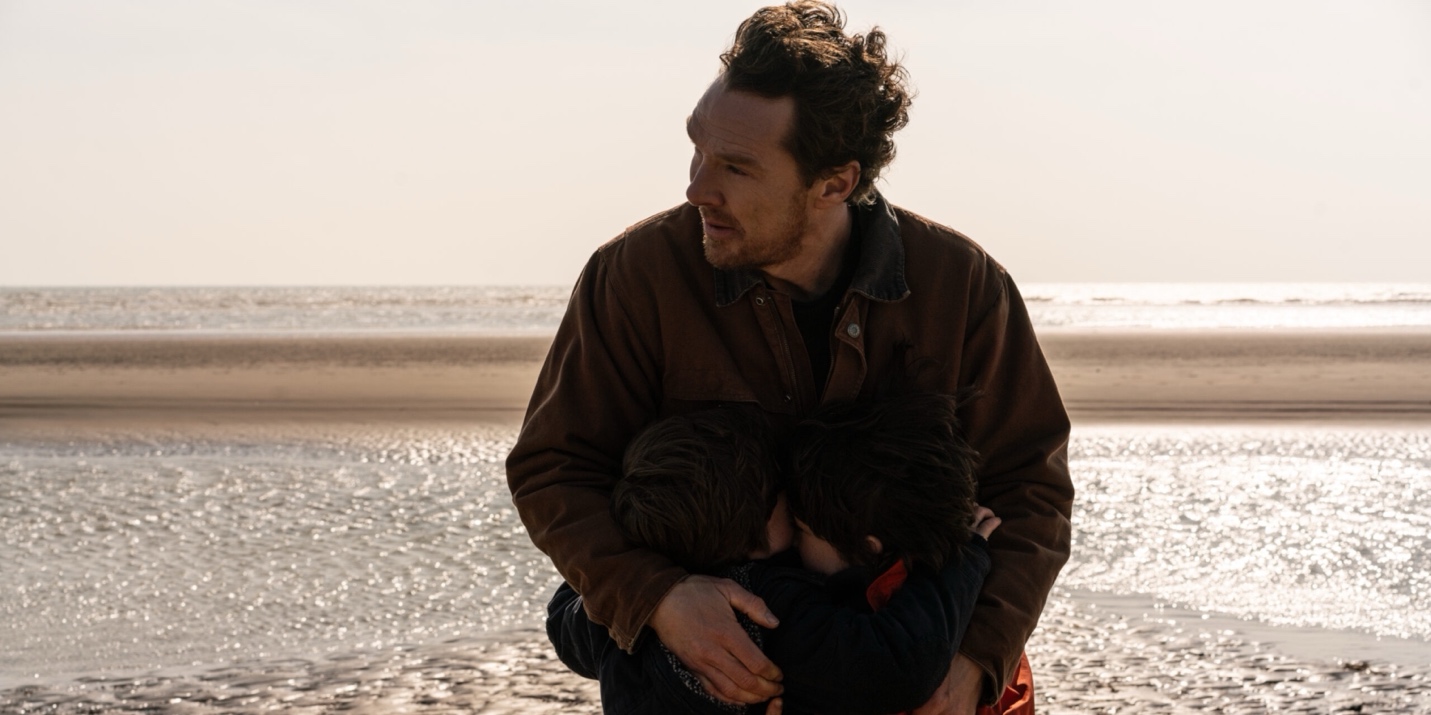
The main strength is that “The Thing with Feathers” doesn’t try to complicate things. Many dramas now overdo it with hints, even though the story is simple. Here the moral is on the surface — and this somehow led to negative reviews that criticize the film for predictability.
But this isn’t a detective or thriller like “Secret Window” — the creators of “The Thing with Feathers” don’t think the viewer is stupid. Yes, the plot is clear, it’s even simpler than in the book. But everything is done not to deceive, but to immerse you in the emotions.
And the authors don’t make the characters endlessly dig into themselves. There are ordinary scenes with walks, and humor — you can joke in dark stories too. This makes the following scenes even sadder and more alive.
By the way, the writer himself appears at the end with an ironic line: “I have so many questions."
"The Thing with Feathers” Sometimes Resembles Horror
On many sites “The Thing with Feathers” is tagged as horror. And that’s partly true: in some moments the film resembles not “Birdman” (another film where a bird-person pursues the hero), but “The Babadook.” That’s one of the key post-horrors that was also about loss and grief.
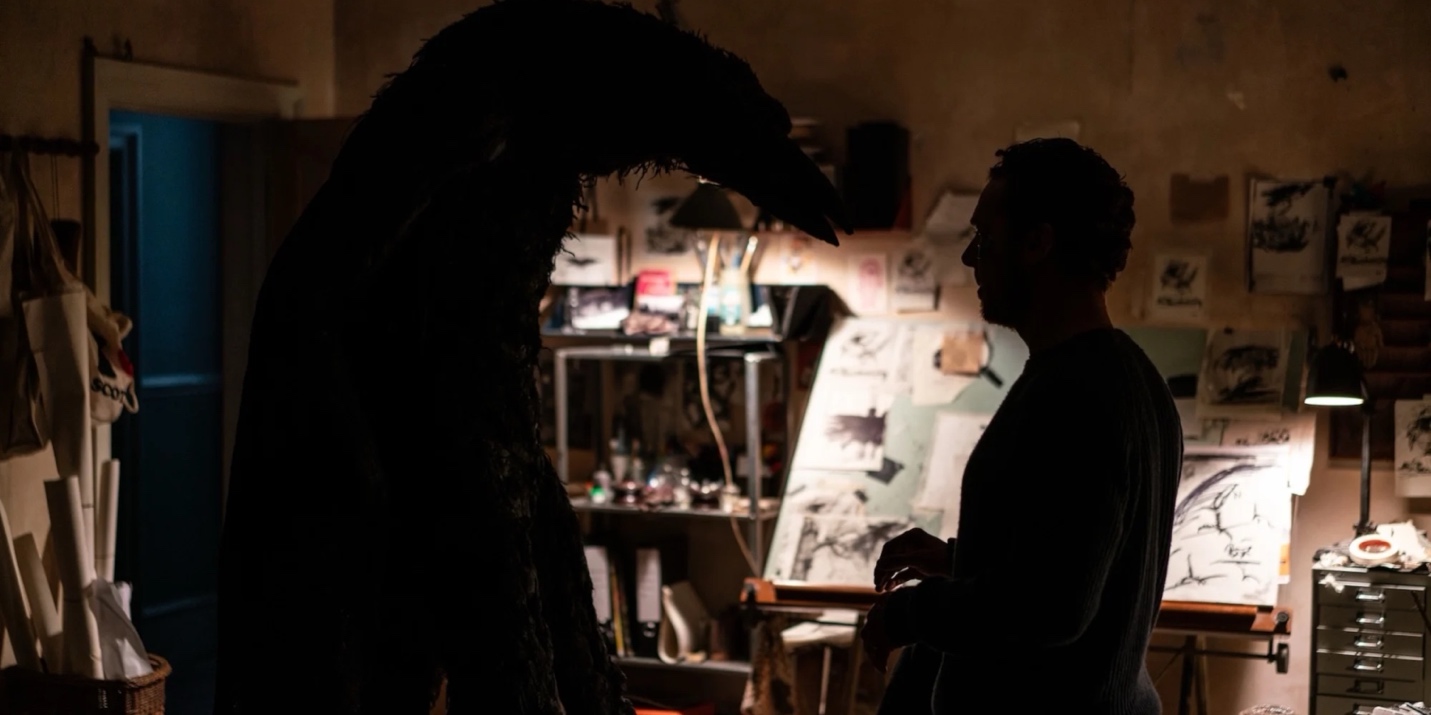
There are many similarities: a parent alone with children, a dark force from illustrations. Plus “The Thing with Feathers” is shot like a horror in some scenes: there are jump scares and even a standard scene with flickering lights and a supermarket rampage. The old, almost square format creates atmosphere — a sense of limited view, tightness, almost claustrophobia. Creepy details often hide in shadows, out of sight.
The main strength is the Raven itself. It was made real, not like a 3D model. This is a monster you can touch. Or rather, one that can touch you — and that’s unlikely to please. It’s also better to watch with the original sound. The Raven was voiced by David Thewlis — he played Lupin in “Harry Potter.” The actor created a perfectly terrifying voice with clicks, creaks, and other frightening sounds.
And that makes the ending even more surprising, which is rather the opposite of “The Babadook.” “The Thing with Feathers” isn’t really about fighting, but about processing feelings and the danger of falling into complete apathy. After all, something scarier than the Raven could come instead.
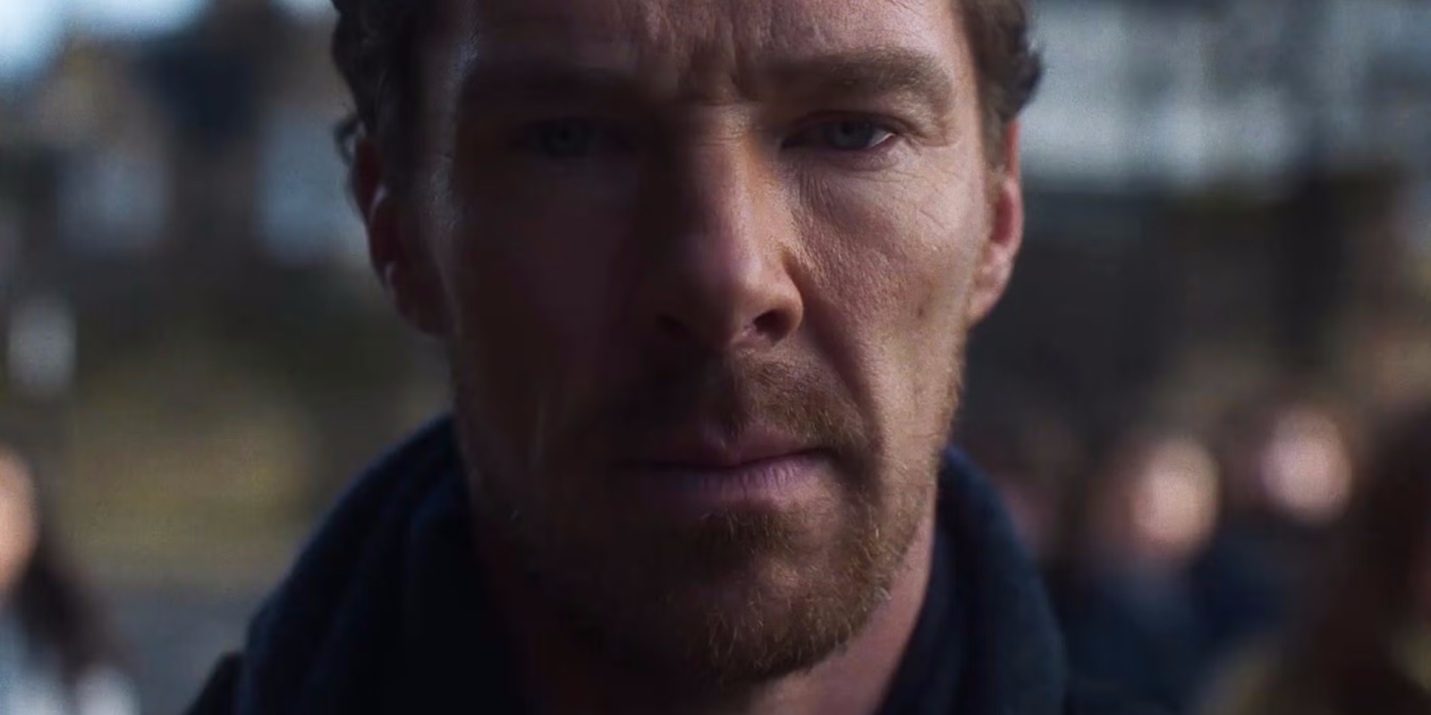
“The Thing with Feathers” can easily be accused of being derivative. But after the raven joke in “American Gods” it became fashionable not to reference Edgar Allan Poe, but to criticize such references. Neither Porter, nor Southern, nor Cumberbatch hid the classical foundation — familiar elements speak of continuity.
What matters more is that “The Thing with Feathers” will take you on an emotional roller coaster. This is a drama that plays at horror, sometimes makes you laugh, sometimes annoys. This is a hero who can be unhappy, pitiful, or repulsive. But this is a film worth experiencing — just like the characters experience their feelings.
Because in the end it creates a therapeutic effect. Even for those who haven’t faced serious losses, it’s important to see what darkness can be inside each person. And to understand what to do with it, and whether to do anything at all.